

7 min read
Most energy-saving work starts in the wrong place: by replacing equipment. The first step is measurement. If the whole plant is metered by one device, nobody knows which section the bill comes from; the work rests on guesswork and the result cannot be verified.
What a power meter measures
- Active energy (kWh) — the consumption the bill is based on.
- Reactive energy (kVArh) — the measure of whether power factor correction is doing its job; penalties come from here.
- Power factor (cosφ) — a low figure means the correction system is not engaging.
- Instantaneous and maximum demand (kW) — watched to avoid capacity-exceedance charges.
- Harmonics (THD) — critical in plants with many drives and electronic loads.
Where to place meters
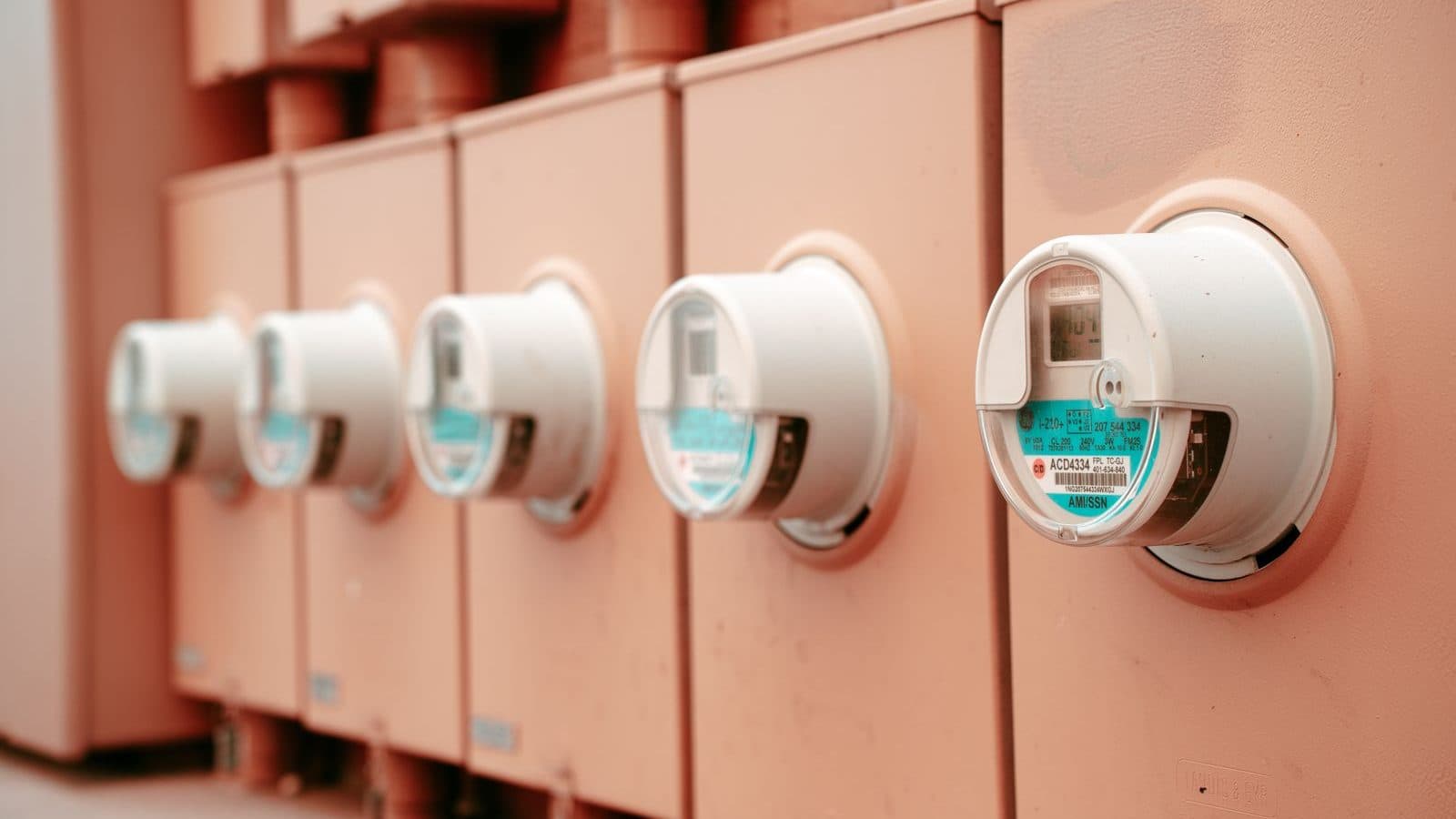
One meter for the whole plant adds nothing to the existing utility meter. The value comes from splitting by section: production line, compressors, lighting, HVAC, refrigeration. With that split, the section whose share is above expectation becomes visible and the savings work focuses there.
The CT choice decides measurement accuracy
A meter reads current through a current transformer (CT), not directly. The CT ratio must suit the line's real load: a 400 A CT on a feeder drawing 20 A loses all resolution. The CT class (0.5S, 1 and so on) also matters where bills will be verified. For retrofits into an existing panel, split-core CTs are used so the line need not be broken.
No report without collecting the data
Seeing the value on the meter's display is not enough; nobody walks to the panel every day to write it down. Connected over Modbus to a data collection system, meters produce hourly, shift and monthly reports automatically. The real difference appears there: consumption divided by output gives energy per unit, and improvement becomes measurable.
Three typical gains that follow measurement
- Seeing a power-factor fault early — noticed before the reactive penalty reaches the bill.
- Cutting out-of-hours consumption — equipment idling is identified and put on a schedule.
- Choosing the right place for a drive — which motor runs at part load is decided from data.
Share your existing panel layout and the sections you want to measure; we will draw up the meter, CT and communication list together. With split-core CTs the installation can be made without breaking existing feeders.
Frequently asked questions
Does a power meter cut the bill by itself?
No, a meter only measures. What cuts the bill are the decisions taken afterwards: correcting power factor, switching off idling equipment, putting a part-loaded motor on a drive. Those decisions cannot be made correctly without data, which is why measurement is the first step.
Does adding a meter to an existing panel mean breaking the feeder?
It does not. Split-core CTs clip around the existing cable, so the feeder stays intact. The voltage connection is taken from the busbar or an existing fuse. In most panels the installation can be done without even a planned shutdown.
Why does harmonic measurement matter?
Electronic loads such as drives, LED drivers and power supplies inject harmonics into the supply. High harmonics overheat the neutral conductor, shorten transformer and capacitor life and blow power-factor capacitors. As the number of drives grows this measurement becomes essential, and harmonic filters or detuned correction may be planned.
How many sections is it sensible to split into?
Five or six main sections are enough to start: production lines, compressors, lighting, HVAC, refrigeration and offices. Even at that level the shape of the bill becomes visible. The next step is to measure the section with the largest share in more detail. Metering every motor from the outset raises cost unnecessarily.