

Industrial Machine Vision Systems
We build camera-based inspection on the production line for surface defects, dimensional deviation, colour difference, labels and date codes, so a faulty product is removed before it reaches the next station.
Quality control at line speed
- Recipe file and parameter backup
- Commissioning record
- Operator training
The success of a vision project depends on lighting and the acceptance criteria far more than on the camera. We therefore start by writing down which defects genuinely warrant rejection. Lighting angle, exposure and focus are tuned to line speed; where a rule-based method is not enough, an AI-assisted model is trained on OK and NG samples collected on site. The camera's decision is synchronised with the PLC and the reject mechanism, and the result is followed as OK/NG on the operator screen. Each product type is stored as its own recipe so no adjustment is needed at changeover.
Scope
- Defect inventory and acceptance criteria
- Camera, lens and lighting selection
- Surface, dimensional and colour inspection
- Label and date verification with OCR
- AI-assisted model training
- PLC integration and reject synchronisation
Deliverables
- Recipe file and parameter backup
- Commissioning record
- Operator training
Does this apply to you?
If even one of these sounds familiar, it is worth a conversation. In the survey we first measure the current state together.
- Quality control is done by sampling, leaving everything between two samples in a blind spot.
- Defects are discovered in the customer's warehouse and the whole batch is sorted back.
- Two operators judge the same product differently; the acceptance decision depends on the person.
- When a date code or label shifts, the problem only shows once the run has finished.
- Visual checking cannot keep up when the line speeds up, and slowing it down cuts output.
How we run this kind of project
- 01
Defect inventory and acceptance criteria
Together with the quality team we write down which defects must be rejected and which are acceptable. Skip this step and the system gets built, but nobody can be sure the threshold is right.
- 02
Sample imaging and feasibility
Trial images are taken on real product. No hardware is quoted before it is confirmed that the defect is distinguishable in the image; some defects need a different lighting technique or an extra camera.
- 03
Camera, lens and lighting selection
Resolution is set by the smallest defect size and exposure by line speed. The lighting technique follows the defect type: grazing light for surface scratches, backlight for transparent material, enclosed constant light for colour.
- 04
Building the algorithm or model
Rule-based methods are used for dimensional checks, presence/absence and OCR. Where the defect's shape differs every time, an AI model is trained on OK and NG samples collected on site.
- 05
PLC integration and reject
The camera's decision is passed to the PLC and time-aligned with the reject mechanism. Wrong timing makes a correct decision remove the wrong product, so the delay is measured and tuned on site.
- 06
Recipe structure and operator training
Each product type is stored as its own recipe so the operator changes over with a single selection. Training covers how to read the results on screen and what to do when NG repeats.
We measure what changed when the project ends
- Inspection coverage
- Every product on the line is inspected instead of samples, removing the blind spot between two checks.
- A fixed acceptance criterion
- The decision rests on a numerical threshold, so shift, operator and ambient light do not change the result.
- Early intervention
- A repeating defect points to a problem in the process, so the source is addressed rather than products being sorted.
- Throughput protected
- Inspection runs at line speed, so the line need not be slowed or stopped for quality.
Projects we have completed in this area
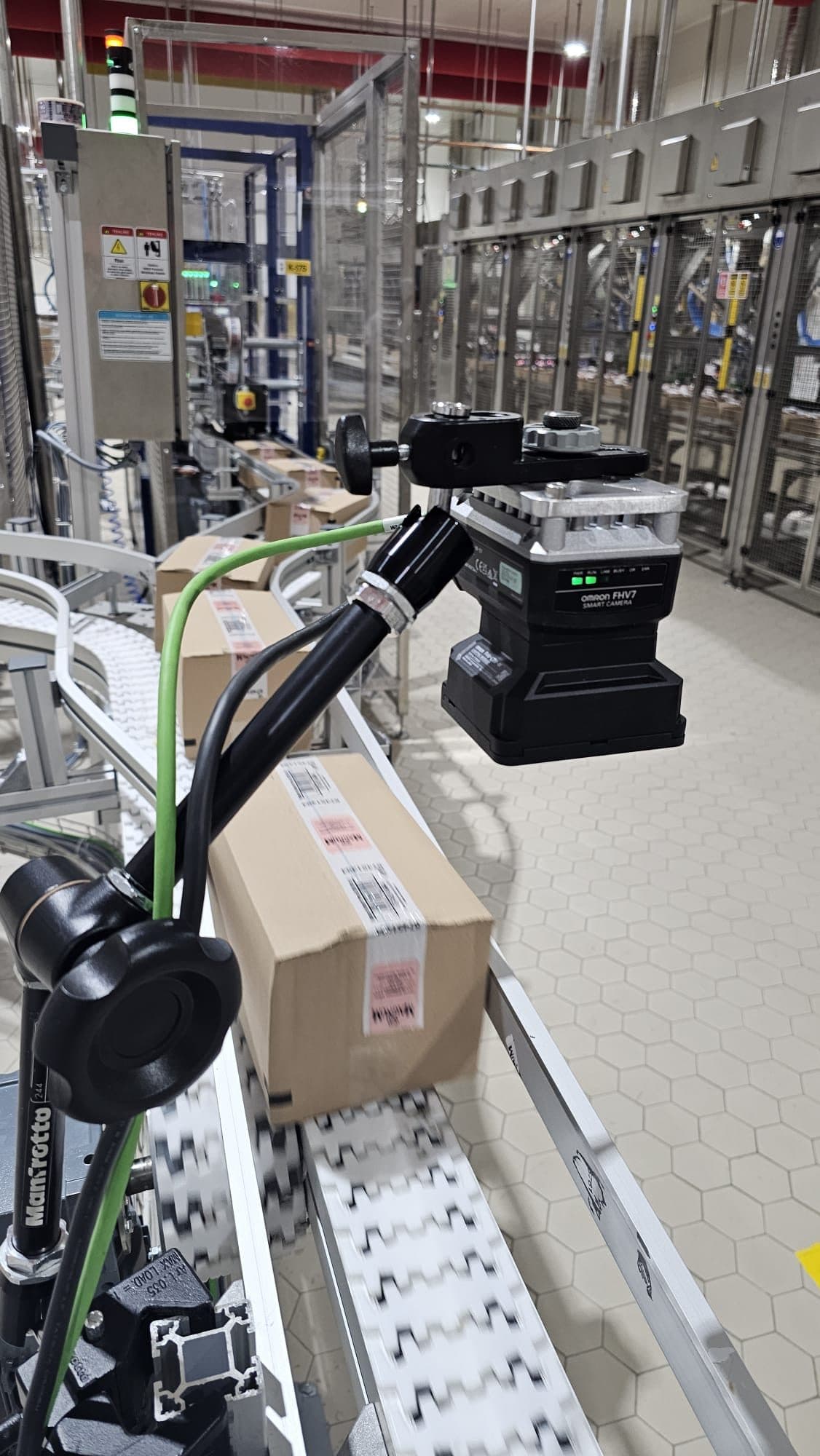 Bir dondurma üreticisi · 2026AI-assisted carton inspection lineCarton inspection at line speed with an Omron FHV7 AI cameraView
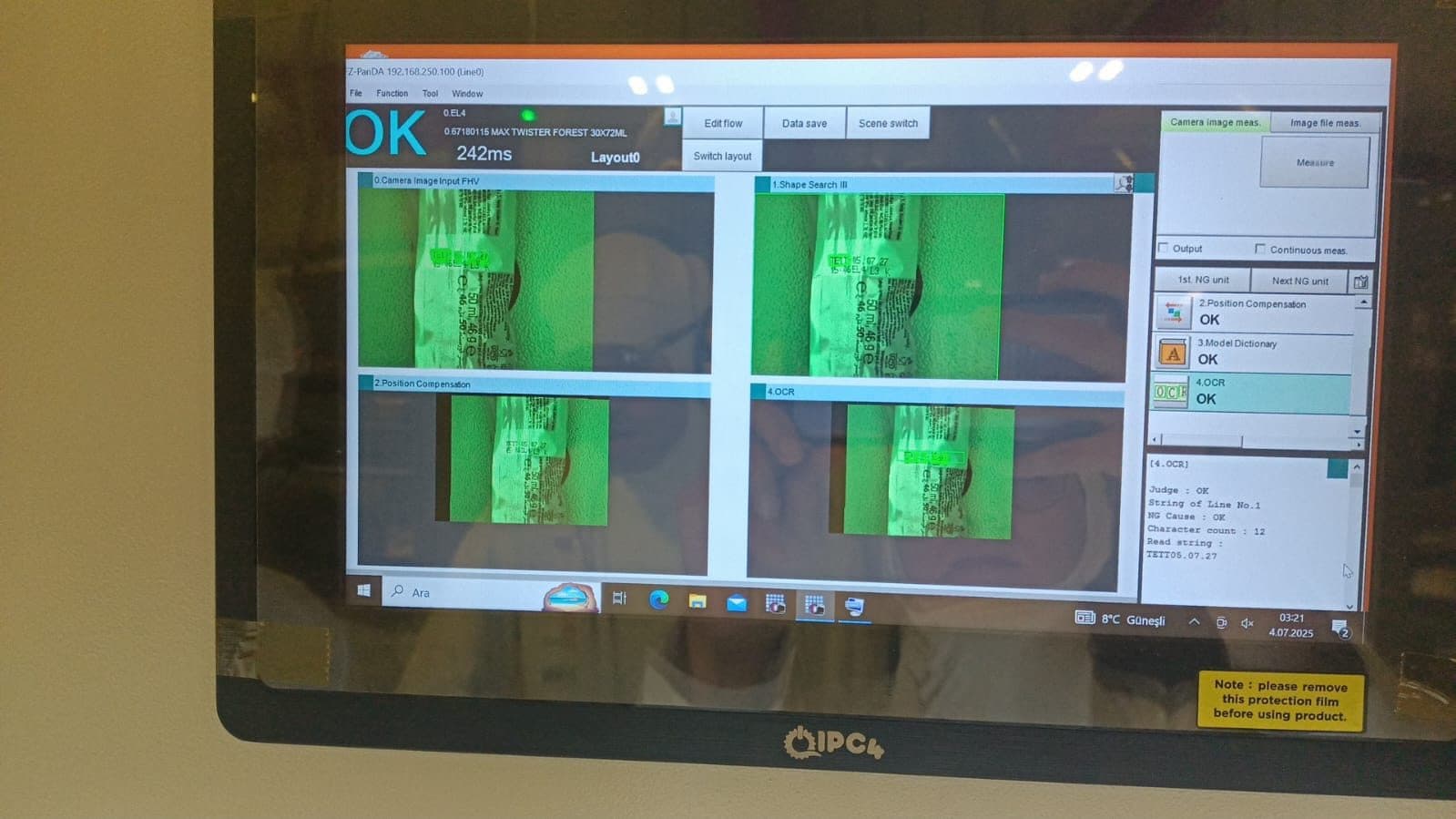 Bir dondurma üreticisi · 2026Date code verification with OCRReading and verifying date codes on the lineView
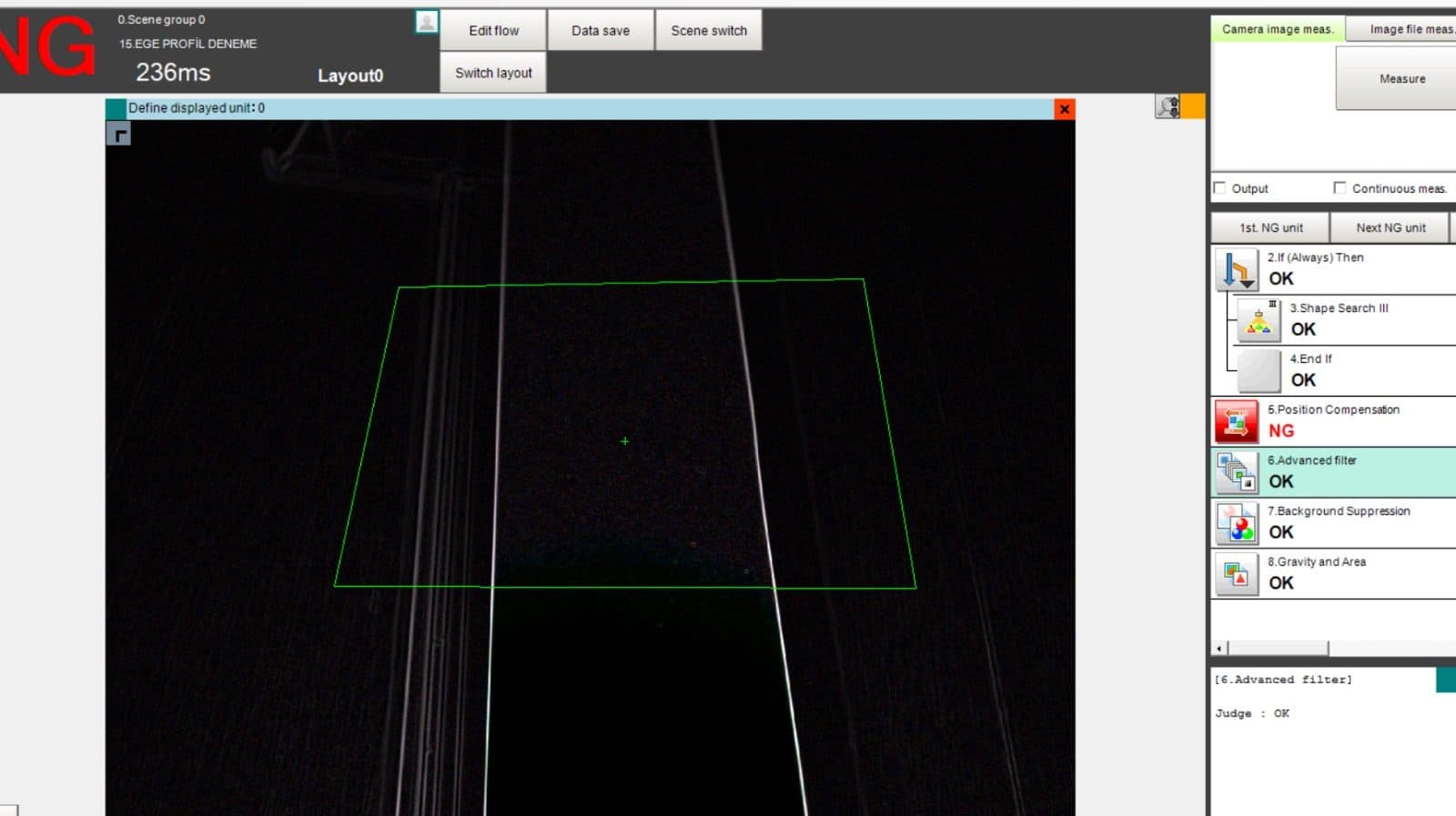 Bir profil üreticisi · 2026Profile surface inspection on the extrusion lineSurface and dimensional checks without stopping the flowView
Frequently asked about Industrial Machine Vision Systems
Which is the most critical component in a vision project?
Not the camera — the lighting. Whether a defect separates from sound material in the image depends entirely on the angle and type of light. With the wrong lighting even the most expensive camera cannot see the defect; with the right lighting a modest camera does the job. That is why we take trial images before quoting.
Should the system use AI or a rule-based method?
If the defect can be described numerically, a rule-based method is faster, more predictable and cheaper: dimensional checks, presence/absence, barcodes and OCR fall in that group. Where the defect's shape differs every time — creasing, crushing, an irregular stain — showing examples beats writing rules, so AI is preferred. In most projects the two are used together.
Can it be added to our existing line later?
Yes, most applications are retrofitted to existing lines. What is needed is enough mounting space for camera and lighting, a trigger signal telling the system the product is passing, and a reject mechanism. Where there is no rejector, the product can first be marked and removed at a later station.
How is a wrong decision corrected?
Images of rejected products are recorded. The quality team reviews them to see why a false reject occurred; the threshold is adjusted or the image is added to training as an OK sample. In a system that keeps no records, this correction is not possible.
We have many product variants — does each need its own setup?
No. Each product type is stored as its own recipe holding the window position, tolerance and threshold. The operator selects the recipe on screen at changeover. Only when a product with very different geometry is introduced may the lighting angle need reviewing.
How is the return on investment calculated?
On two items: the cost of a defective product reaching the customer (recall, re-sorting, returns) and the cost of work wasted on the line. When a faulty product enters later stations, the labour and material spent on it are also lost. On most lines the sum of these two covers the investment quickly.
Other engineering areas
Have a project or a material list?
Send us your list; we return stock status, lead time and wholesale pricing the same day.