

AI-assisted carton inspection line
Carton inspection at line speed with an Omron FHV7 AI camera
 01
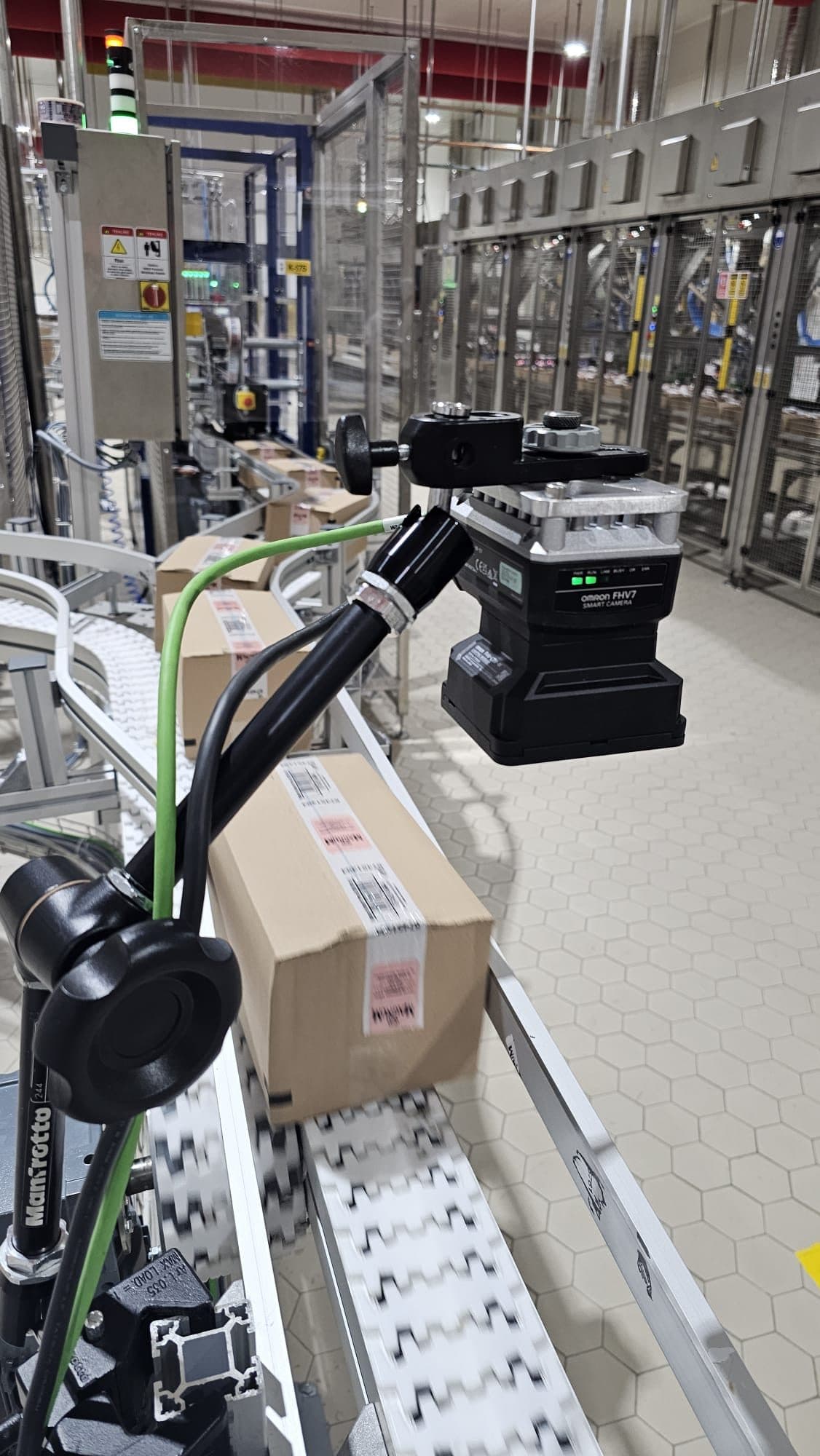
01Cartons leaving the ice cream production line are inspected in real time with an Omron FHV7 smart camera and AI-assisted image processing; defective cartons are rejected before palletising.
- Customer
- Bir dondurma üreticisi
- Sector
- Food production
- Field of work
- Machine vision and quality control
- Year completed
- 2026
The need
What had to be solved on site?
The visual check carried out further down the line after cartoning depended on the operator's attention. Towards the end of a shift, or when the line sped up, defects such as excess tape, missing tape and corner deformation could slip through.
A defective carton reaching the pallet meant the fault would be discovered in the customer's warehouse. At that point the whole pallet has to be opened for a single carton; the cost sits in labour and lost confidence rather than in the carton itself.
How we solved it
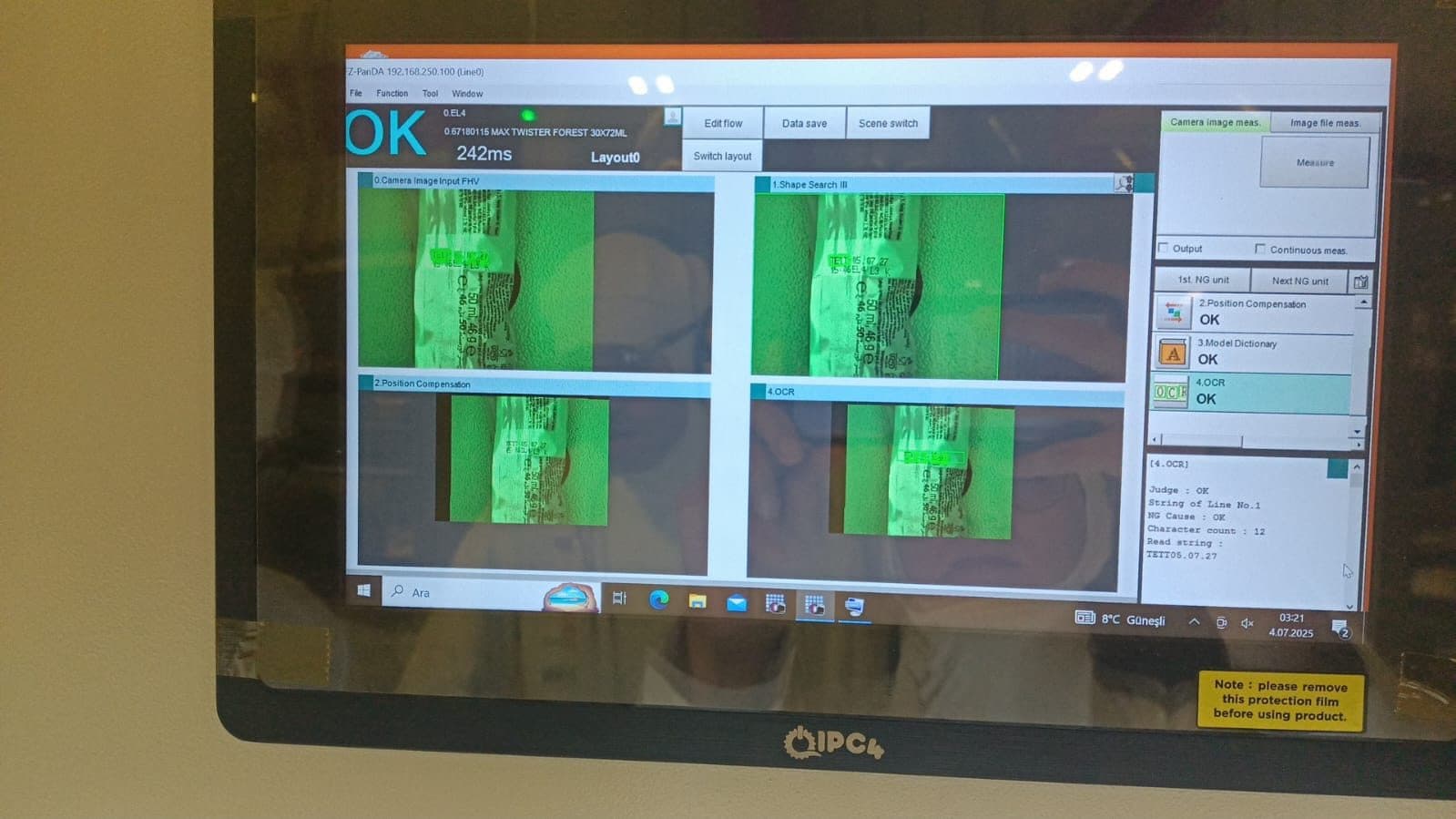
The project covers the inspection carried out on the line after the ice creams have been cartoned. Every carton is scanned with a high-resolution camera, and the AI algorithms of the Omron FHV7 distinguish defects such as deformation, excess tape and missing tape at line speed.
The camera runs in sync with the line's reject mechanism. A carton judged defective is taken off the line before it reaches the palletiser, so quality control runs without stopping production and no faulty product ends up on a pallet.
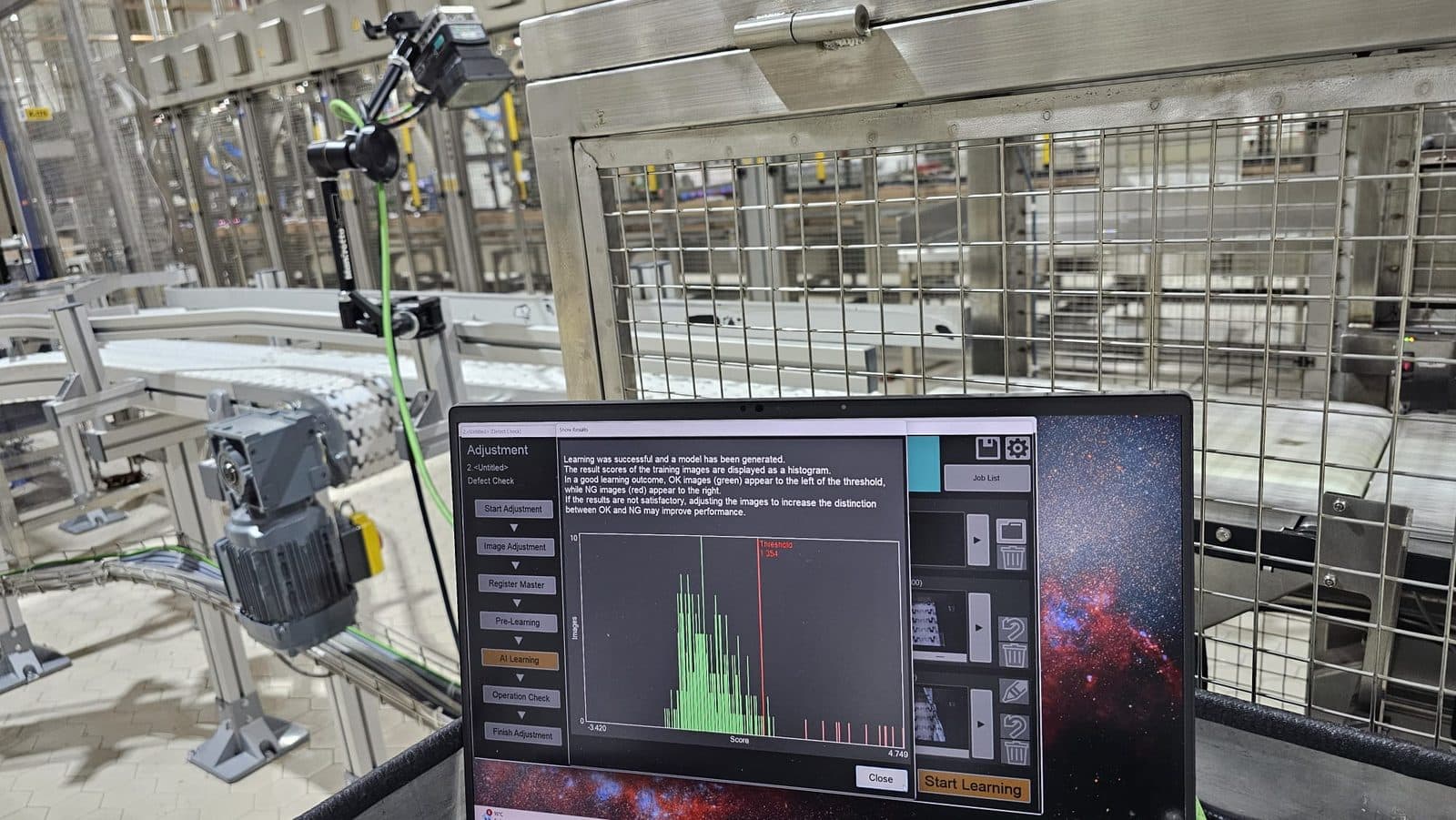
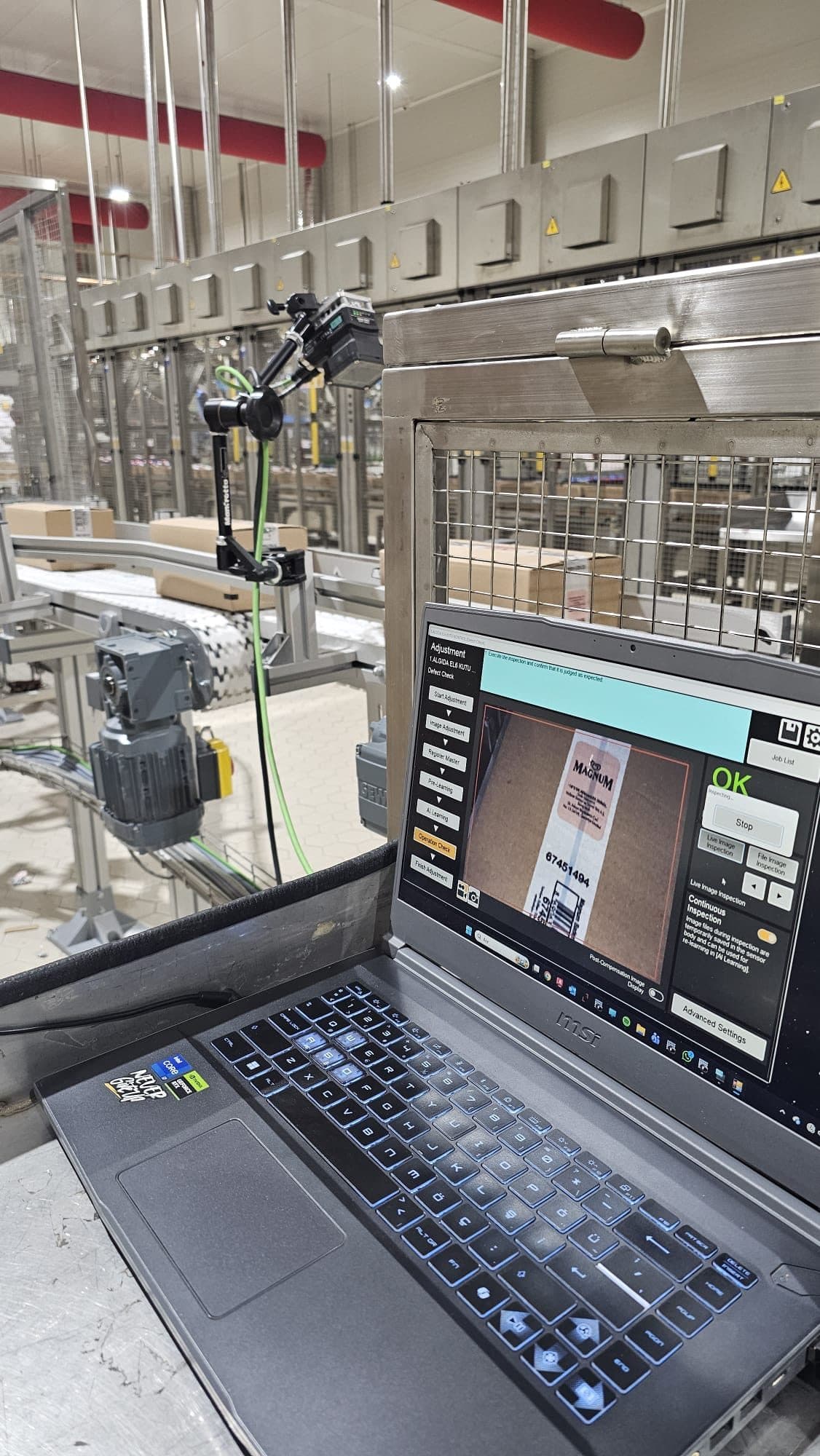
Model training was carried out on site with real production images. After training, the system was validated in two separate test runs under different lighting and line-speed conditions, and the acceptance criteria were made visible on the operator screen.
What separates AI-assisted inspection from classic rule-based image processing is that you do not have to describe the defect in advance. The classic approach defines thresholds such as "faulty if the tape deviates more than so many millimetres from the edge", and every new defect type needs a new rule. The FHV7's AI model is instead trained on OK and NG samples collected on site and derives the acceptance boundary itself.
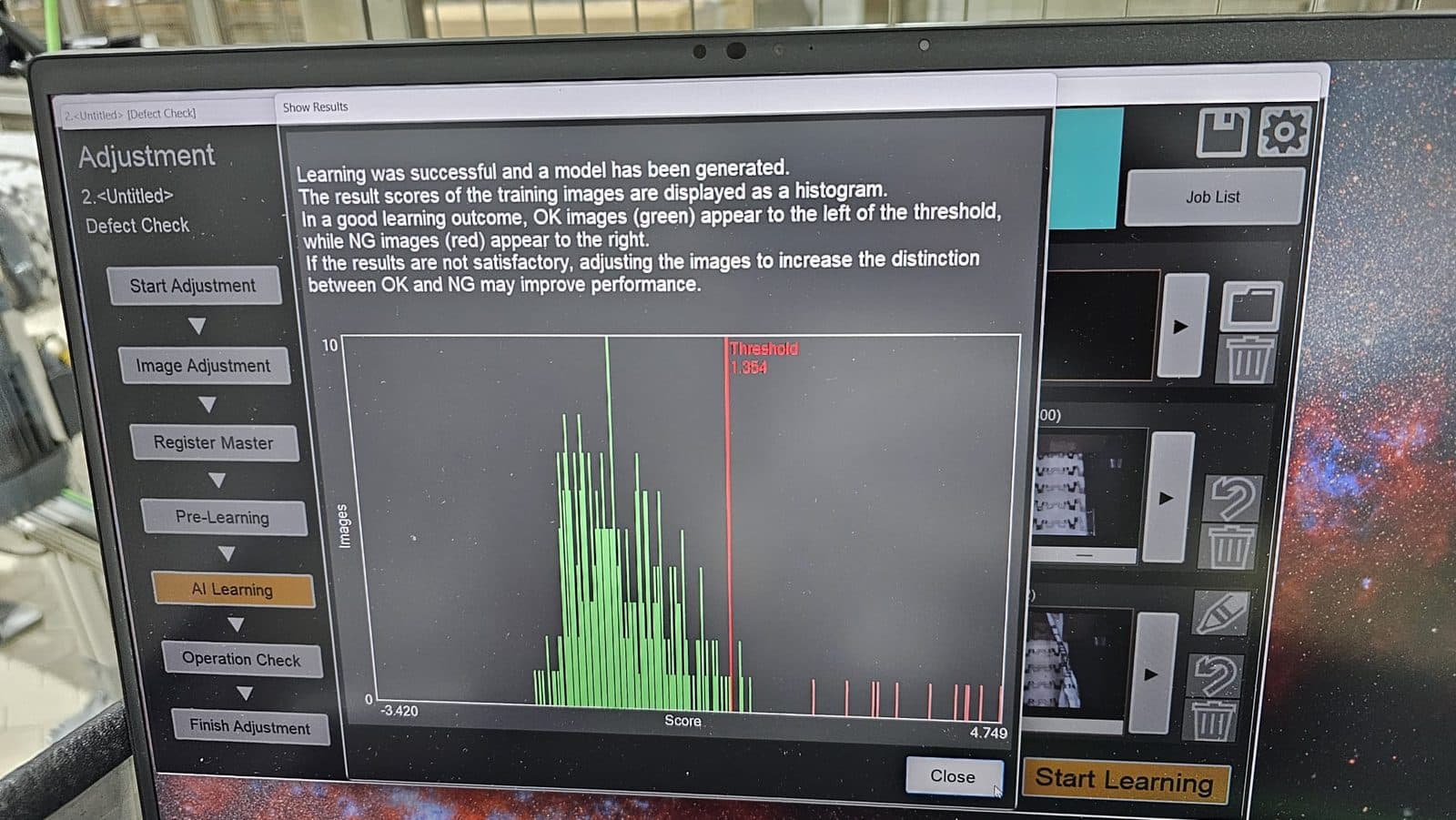
The critical point in training was that the NG samples came from real production. Instead of artificial defects prepared under laboratory conditions, the line's own faults were used, so the model learned the variation actually encountered on the floor. The model went live once the training histogram showed the OK and NG clusters separating cleanly.
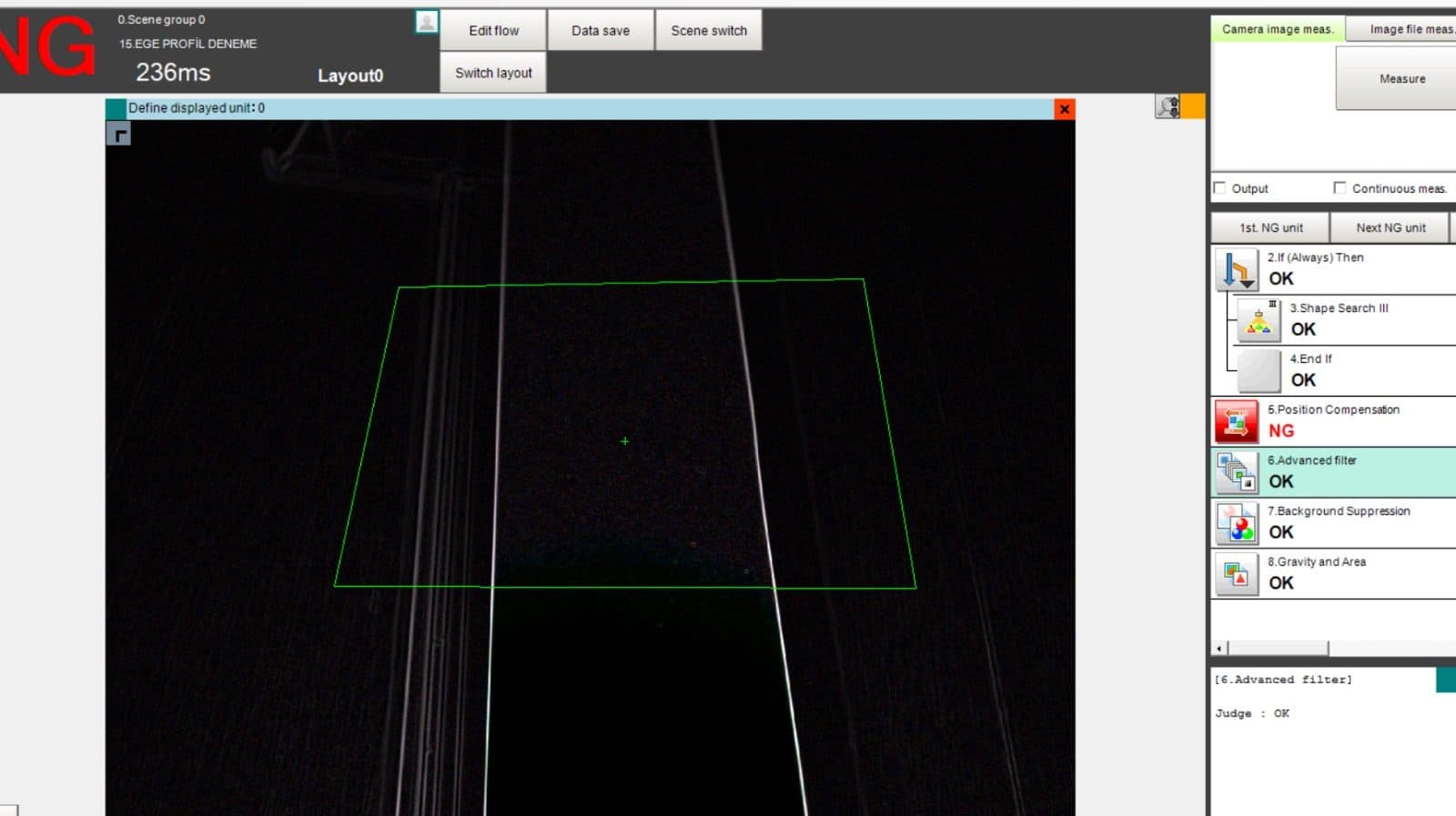
Lighting was the part of the project that took the most effort. On glossy packaging, a reflection can mask a defect or look like one that is not there. Camera angle and lighting position were adjusted so that reflections fall outside the inspection window.
The order we worked in
- 01
A defect inventory was built
Together with the quality team we wrote down which defects genuinely warrant rejection and which are acceptable. The acceptance boundary was agreed before any measurement was made.
- 02
Camera and lighting layout
The mounting point was chosen considering the angle at which the carton passes the camera, the line speed and vibration. Lighting was positioned so that glare falls outside the inspection area.
- 03
Model training and validation
The model was trained with OK and NG images collected from real production, then validated in two separate test runs under different lighting and line-speed conditions.
- 04
Reject synchronisation
The camera's decision was time-aligned with the line's reject mechanism, so a defective carton is removed before it reaches the palletiser.
- Products inspected
- Every carton on the line
- Decision point
- Before palletising
- Effect on line speed
- None
- Validation
- Two separate test runs
What this changed on the floor
- 01
AI-assisted inspection
Surface defects are caught automatically, without depending on an operator's eye.
- 02
Uninterrupted production
Inspection happens at line speed; the line does not have to stop for quality control.
- 03
Rejection before palletising
Synchronised with the reject system, the camera removes a faulty carton before it reaches the palletiser.
- 04
Repeatable acceptance criteria
A quality threshold that stays the same for every product, independent of shift or operator.
Frequently asked about this application
When is AI-assisted inspection more suitable than a rule-based system?
AI has the advantage when the defect is hard to describe numerically. For faults whose shape differs every time — creased tape, a crushed corner — showing examples gets you there faster than writing rules. For dimensional checks, presence/absence checks or barcode reading, a rule-based method is both faster and more predictable.
How many samples are needed to train the model?
There is no fixed number; what matters is the variety of the samples. A smaller but balanced set covering the different defect types the line actually produces beats hundreds of similar OK images. If the OK and NG clusters do not separate on the post-training histogram, samples are added and training is repeated.
If the packaging design changes, does the system have to be rebuilt?
No. A separate recipe is defined for the new pack and the operator selects it on screen at changeover. Only if the character of the defects changes completely is the model retrained for that recipe; the camera and lighting layout stay the same.
What happens if the system rejects a good product?
Every rejected product's image is recorded. The quality team can review these images to see why a false reject occurred; the threshold is adjusted if needed, or the image is added to training as an OK sample. The system sharpens over time.
Do you have a similar need on your line?
Describe the defect you need to catch or send a photo of your production line, and we will assess feasibility and the hardware needed together.
Have a project or a material list?
Send us your list; we return stock status, lead time and wholesale pricing the same day.