

6 min read
Terminals are the most repeated and most overlooked part of a panel. A panel has hundreds of connection points and every one is a potential hot spot. The terminal type affects assembly time, maintenance burden and fault frequency directly.
| Type | Assembly speed | Vibration resistance | Maintenance | Where it pays |
|---|---|---|---|---|
| Screw | Slow | Medium — needs re-torquing | Torque checks essential | Few connections, tight budget |
| Spring (cage) | Fast | High | None | Vibrating machinery, high-count panels |
| Push-in | Fastest | High | None | Series-built panels, ferruled wiring |
The hidden cost of screw terminals
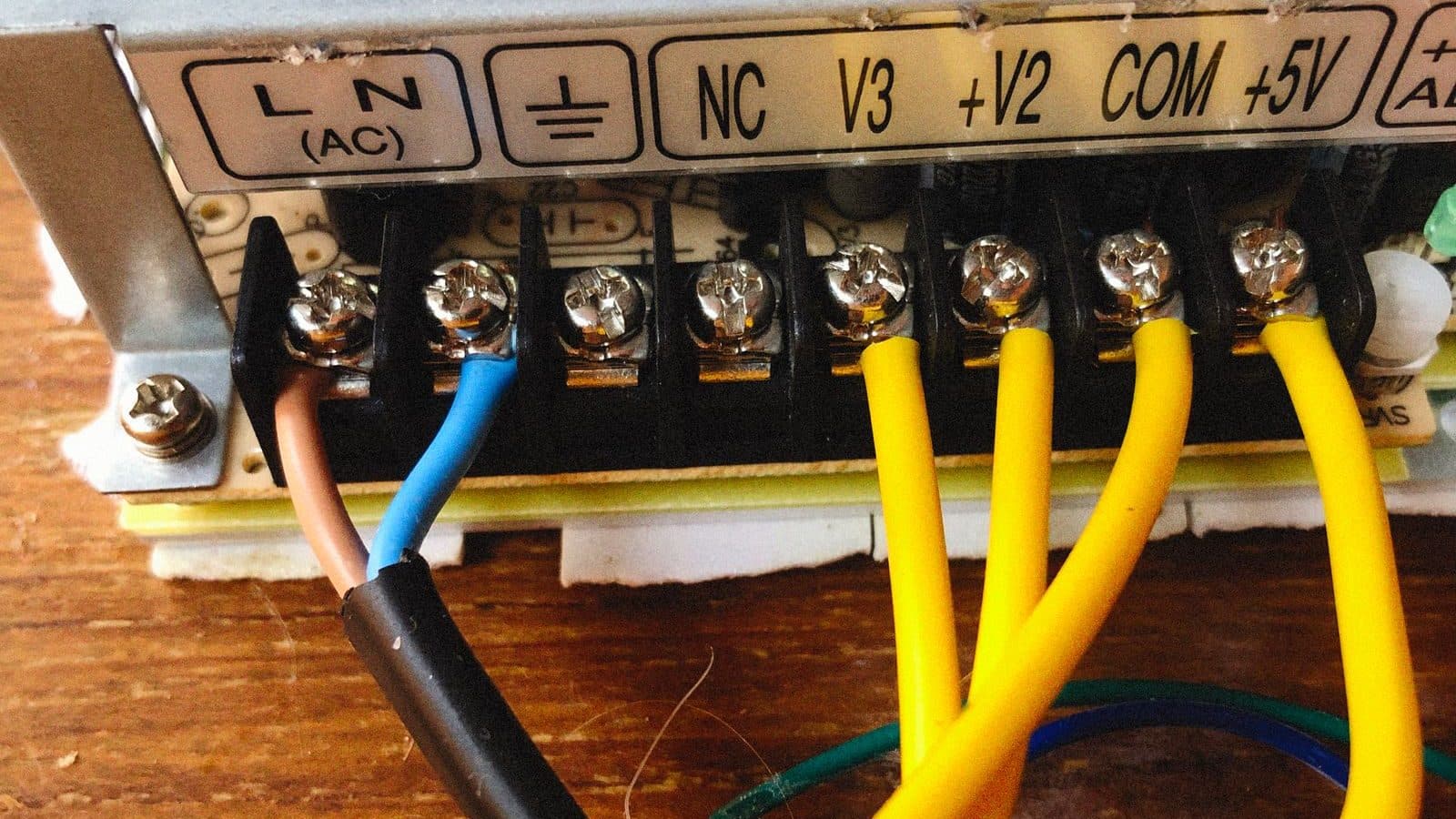
Screw terminals are the cheapest per unit, but two cost items stay invisible. First, assembly time: every connection is made with a screwdriver at the correct torque. Second, maintenance: copper settles over time (cold flow), the screw loosens and contact resistance rises. Panels with screw terminals therefore need periodic torque checks — skip them and scorched terminals are inevitable.
Spring and push-in: where they differ
Both clamp with spring force, so they do not loosen under vibration and need no torque checks. The difference is how you connect: with a spring terminal you open the spring with a tool and insert the wire; with push-in you push a ferruled wire straight in. Push-in gives a clear speed gain in series production but requires the wire to be ferruled or solid.
Cross-section, current and terminal size
- A terminal is chosen for the largest cross-section to be connected; the size limit cannot be exceeded.
- Rated current falls with ambient temperature and the number of terminals mounted side by side, not just with size.
- Many loaded terminals in a row heat one another; the catalogue derating table must be applied.
- Earth terminals contact the rail directly; they are green-yellow and a separate type, never mixed with ordinary blocks.
Marking: where terminals earn their keep
Terminal numbering is the single factor that decides a panel's maintenance time. Finding a fault in an unmarked panel means matching every wire against the drawing one by one. A terminal schedule and marking take a few hours during the build; without them, every intervention adds hours.
With Onka terminal blocks, Konsan marking systems and Eurowest cable lugs, the entire in-panel connection can ship on one delivery note. Send your terminal schedule and we will check type and size with you.
Frequently asked questions
How often should screw terminals be re-torqued?
The first check comes a few weeks after commissioning, once the copper has settled. After that, annually is enough for most plants. On vibrating machinery and where temperature swings are large, every six months is advisable. Combining the check with a thermal camera finds loosened points without dismantling anything.
Can stranded wire be pushed into a push-in terminal without a ferrule?
It should not be. Pushed in without a ferrule, the strands spread, some never reach under the spring and the contact area drops. The speed advantage of push-in only appears with ferruled wire anyway. Solid wire can be pushed straight in.
Can two wires go into one terminal?
Not unless the terminal is designed for two conductors. With two wires clamped at one point, the thinner one stays loose and that spot heats up. The correct route is a jumper bar or a double-level terminal. This is one of the most frequently written non-conformities in panel inspections.
Can the terminal type be changed in an existing panel?
It is possible, but wire lengths decide. Changing the type changes the layout and depth on the rail, and existing wires may fall short. A partial change also mixes types on one rail, which makes jumper bars incompatible. In practice, terminals are usually changed as part of a panel refurbishment.