

Cable pulling for power and communications infrastructure
Trenching, ducting and cable pulling in one scope
 11
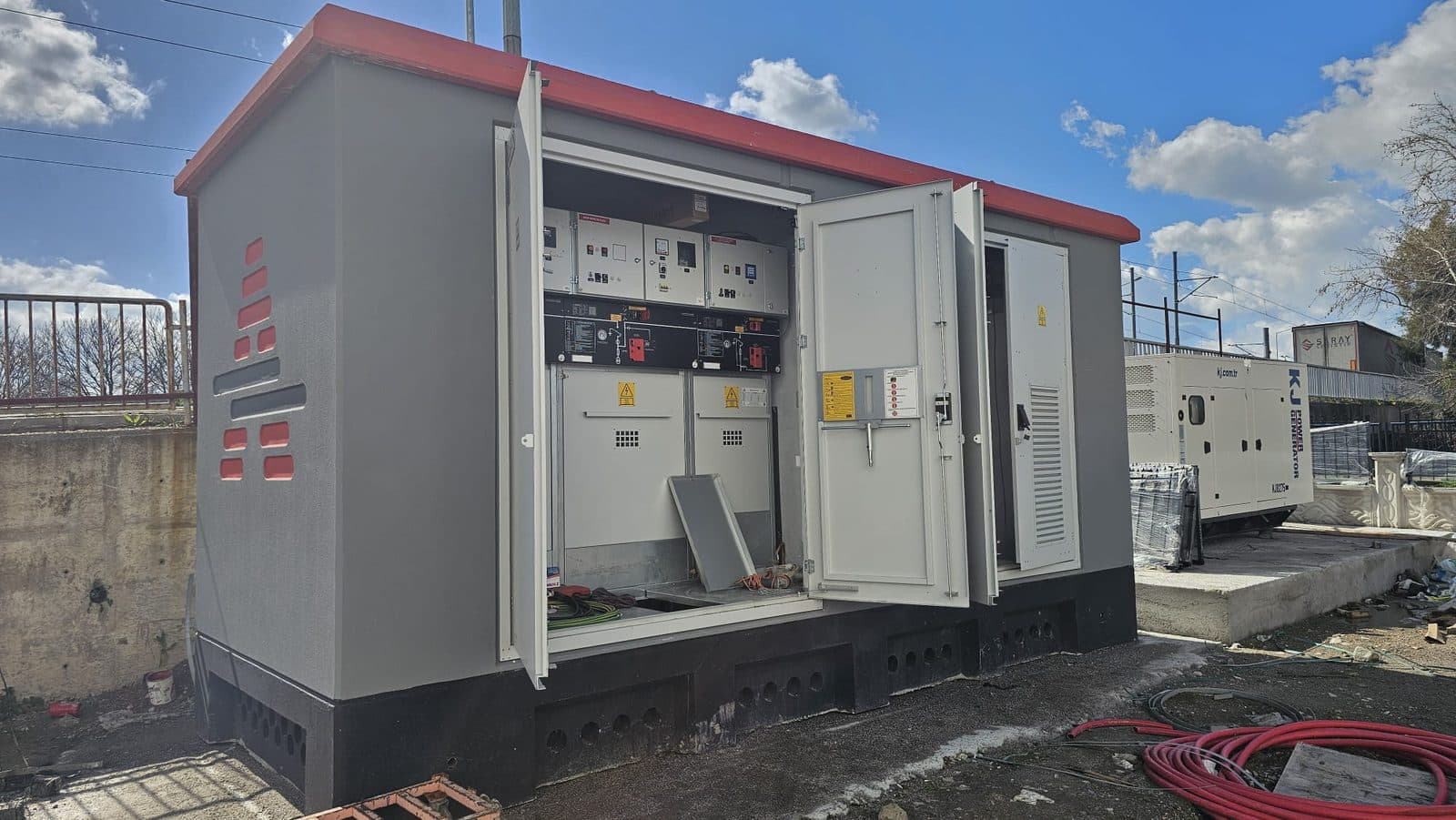
11Trench excavation, HDPE and PVC ducting, MV-LV and data cable pulling and termination for power and communications infrastructure on industrial and commercial sites.
- Sector
- Industrial and commercial site infrastructure
- Location
- İzmir, Türkiye
- Field of work
- Power and infrastructure
- Year completed
- 2024
The need
What had to be solved on site?
In infrastructure work the most expensive mistake is planning for today's need. Every new line that has to be added after the trench is closed means digging again, and digging means breaking up concrete, asphalt and site traffic once more.
The second problem is carrying power and data lines in the same duct. The magnetic field of a power cable can cause interference in a data cable beside it, and because such faults cannot be found by looking at the cable, they get chased for weeks.
How we solved it
Duct routes for power and communication lines on industrial and commercial sites were designed, and trenching, ducting, cable pulling and termination were carried out by our own team.
The route was planned not only for today's need: spare duct capacity was left for lines to be added later. Power and data lines were run in separate ducts, removing any risk of interference.
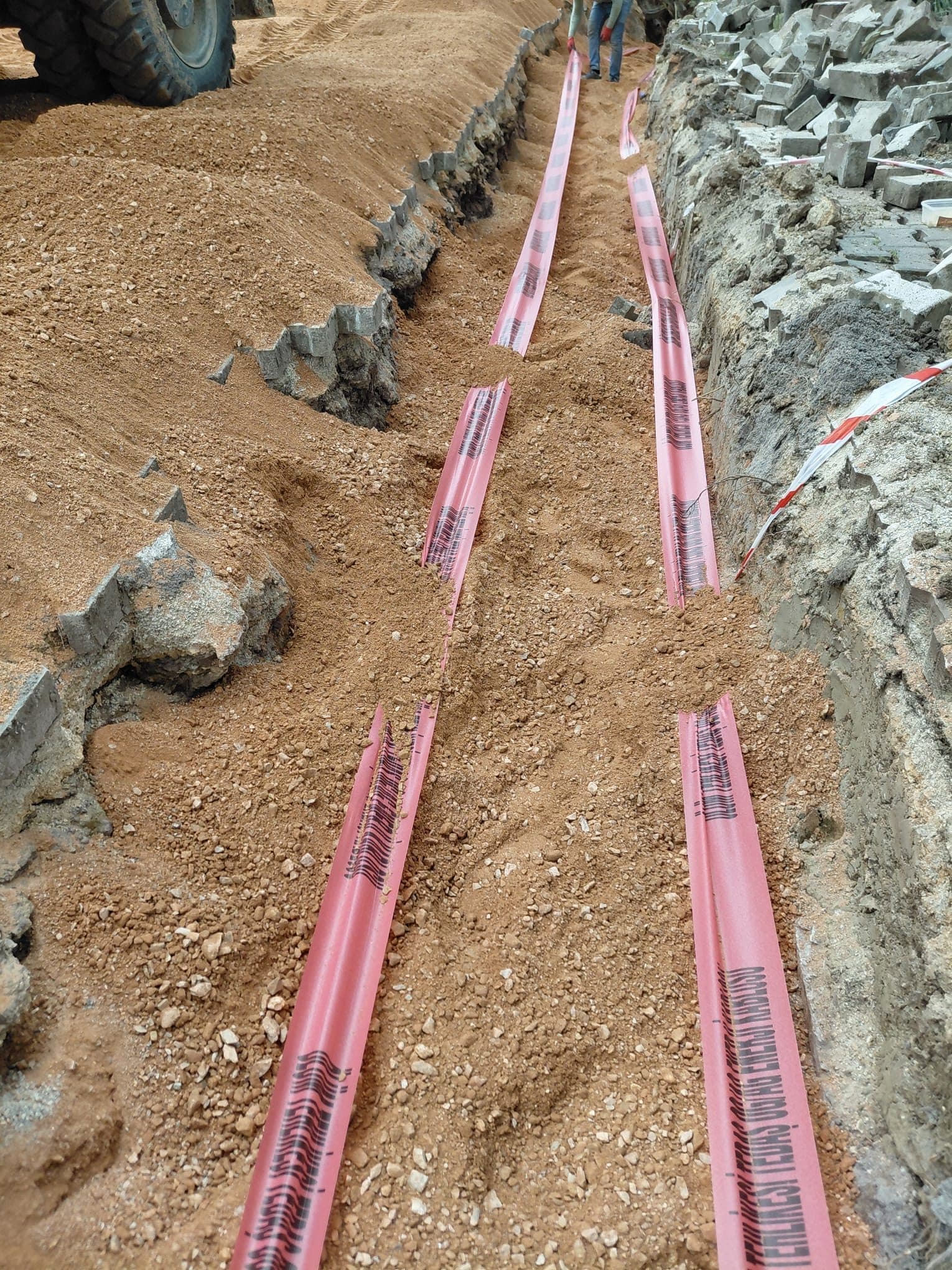
Before the trench was closed, warning tapes were laid and the route was recorded, so the line's position is never in doubt during later excavation work.
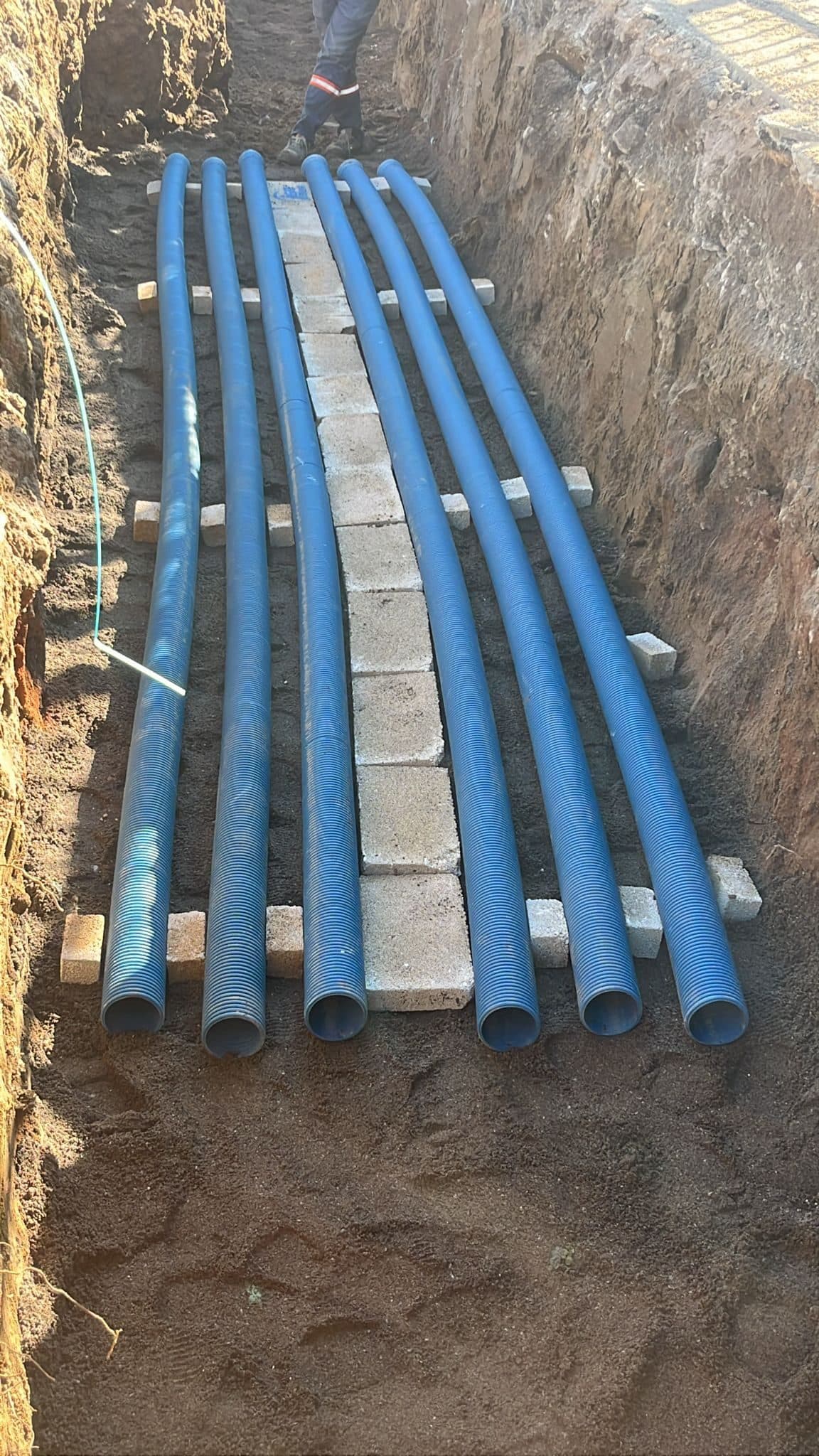
More ducts were laid than the current number of lines required. The cost of an empty duct is very small next to the cost of a future excavation, which makes leaving spare capacity almost always the right call.
Power and data lines were run in separate ducts. That separation removes the risk of interference and means a future intervention on the data line alone does not require touching the power line. Duct colours were separated too — red for power and a different colour for data — to prevent confusion on site.
Trench backfill was layered so that the load above is spread across the duct. Backfilling straight with coarse material crushes the duct over time or puts point pressure on the cable. Fine material was laid around the duct before the upper backfill was completed.
Warning tapes were laid and the route was recorded before the trench was closed. Because a bucket meets the tape before the cable in any later excavation, the tape prevents the line being cut. The route record means the maintenance team never has to guess where the line runs.
The order we worked in
- 01
Route and capacity plan
More ducts than today's line count were planned, leaving spare capacity for lines added later.
- 02
Separating power and data
The two line types were put in separate, differently coloured ducts, removing interference risk and site confusion.
- 03
Layered backfill
Fine material was laid around the duct before the upper backfill, preventing point pressure and crushing.
- 04
Warning tape and route record
Tape was laid and the route recorded before closing the trench, protecting the line in later excavations.
- Duct type
- HDPE and PVC
- Line separation
- Power and data separate
- Spare capacity
- Empty ducts left
- Protection
- Warning tape and record
What this changed on the floor
- 01
Long-life infrastructure
Duct and backfill details were executed to make maintenance easy.
- 02
Spare capacity
Empty ducts were left for future lines, so no re-excavation is needed.
- 03
Power and data separated
Power and communication lines run in separate ducts, preventing interference.
- 04
A recorded route
Warning tapes and a route record protect the line during later excavation.
Frequently asked about this application
Why lay more ducts than needed?
The cost of an empty duct is very small next to the cost of a future excavation on the same route. Digging is not only earthworks; it means breaking concrete or asphalt, cutting site traffic and putting existing lines at risk. A spare duct removes all of that cost in advance.
Can power and data cables share a trench?
They can share a trench but should not share a duct, and a separation distance should be kept. The magnetic field of a power cable can cause interference in a data line. Separate ducts also make it possible to intervene on just one line later.
Does warning tape actually work?
Yes, because during excavation the bucket meets the tape before it reaches the cable. That gives the operator a few centimetres of warning to stop. Since cutting a line means both loss of power or connectivity and a serious safety risk, this simple measure pays off heavily.
Why is trench backfill layered?
Backfilling straight with coarse material lets stones put point pressure on the duct. Over time, with the load above, that pressure crushes the duct or leaves local damage on the cable. Laying fine material around the duct spreads the load and prevents it.
Do you have a similar need on your line?
Describe the defect you need to catch or send a photo of your production line, and we will assess feasibility and the hardware needed together.
Have a project or a material list?
Send us your list; we return stock status, lead time and wholesale pricing the same day.