

Compact kiosk transformer and generator installation
A 1250 kVA compact kiosk and an 800 kVA diesel generator
 09
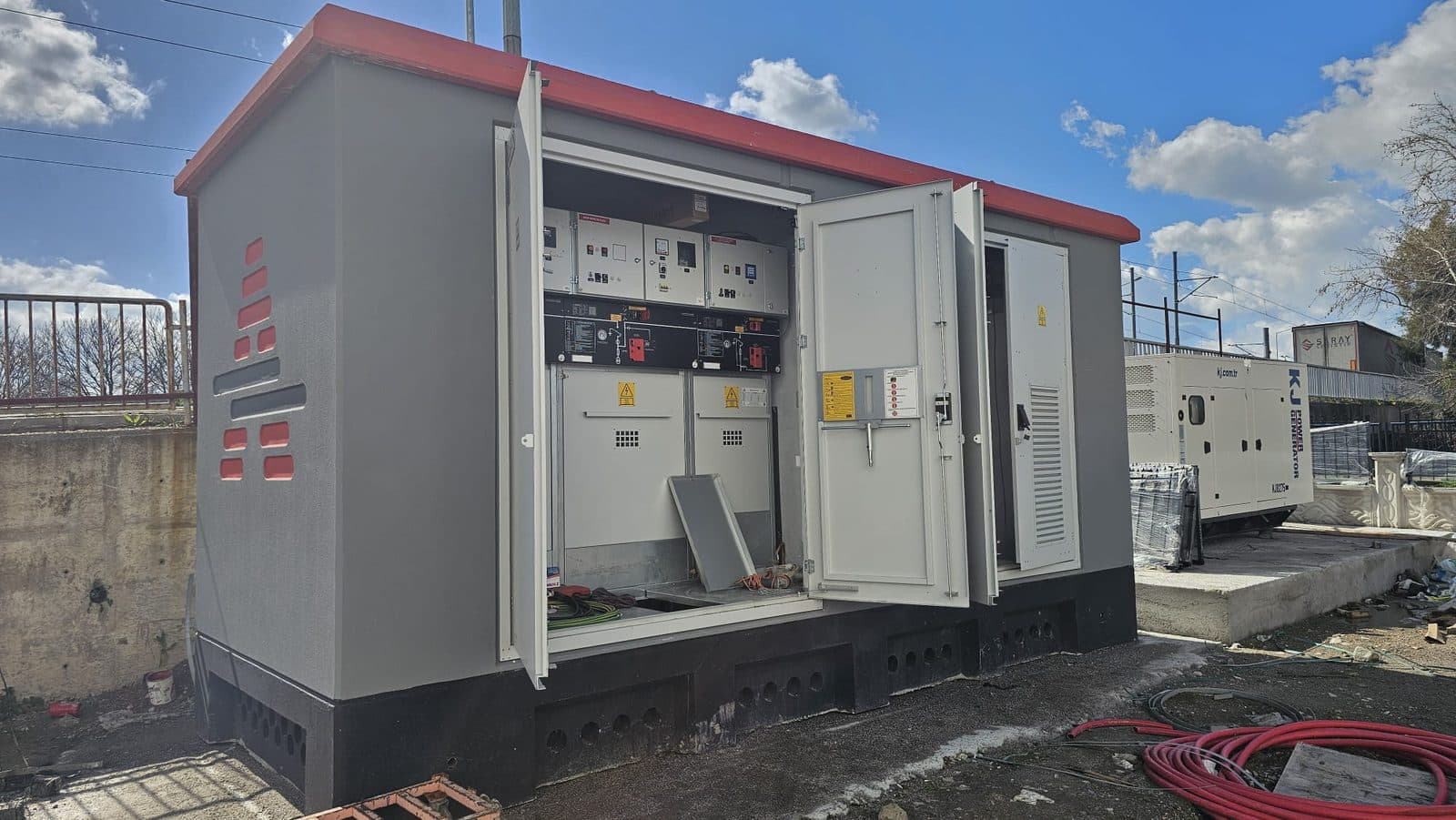
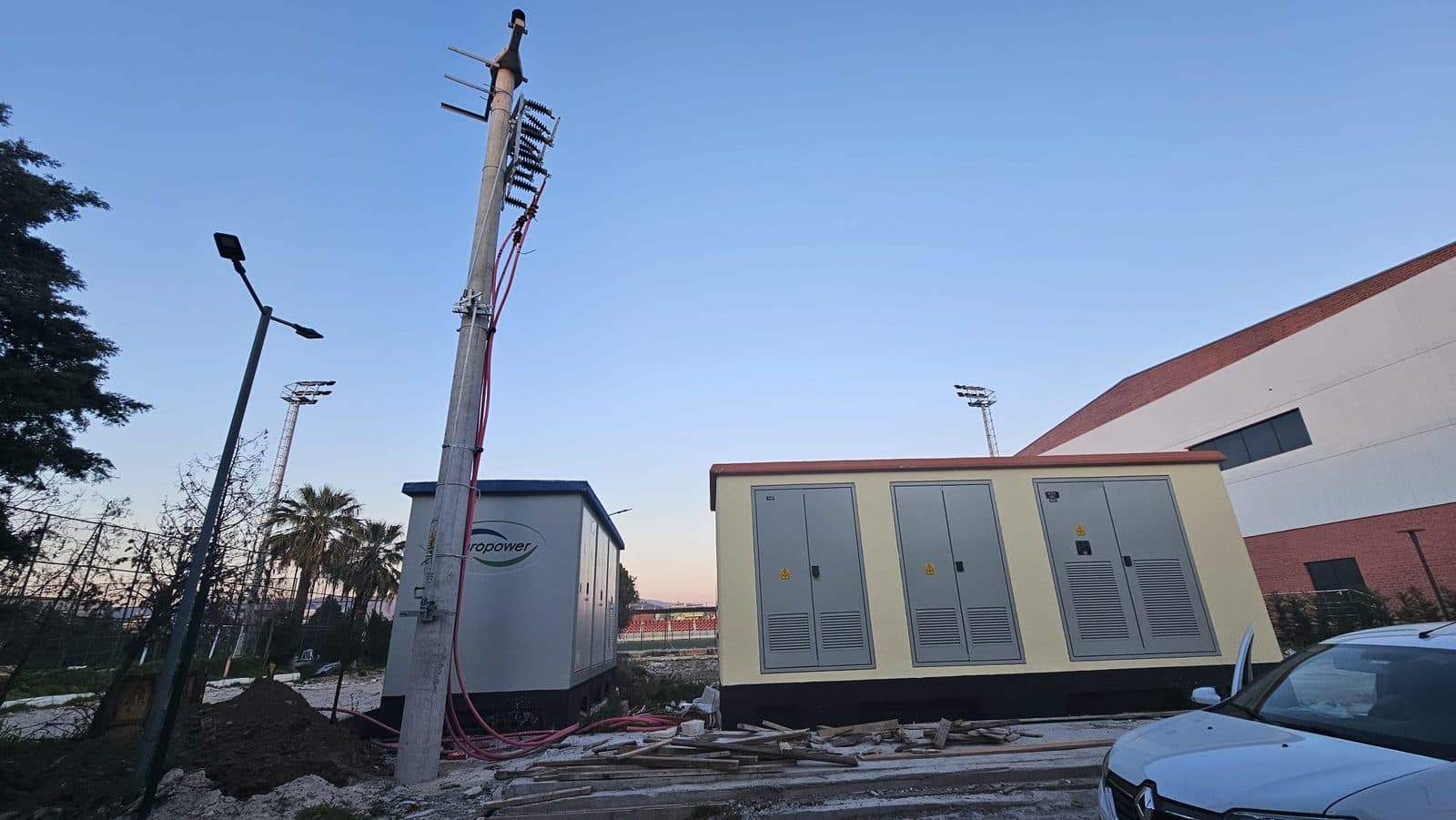
09Turnkey installation of a 1250 kVA compact kiosk transformer and an 800 kVA diesel generator at an industrial plant, together with MV-LV cabling, an ATS panel and the earthing system.
- Sector
- Industrial plant power infrastructure
- Location
- İzmir, Türkiye
- Field of work
- Power and infrastructure
- Year completed
- 2024
The need
What had to be solved on site?
The plant's supply came from a single source. A regional outage or maintenance work meant production stopped completely, and in a facility with critical processes that risk was not acceptable.
Adding backup power does not end with buying a generator. How the transfer between grid and generator is made, which loads are fed during the transfer, and getting the earthing system right for both sources are more decisive than the purchase decision.
How we solved it
At an industrial plant we carried out the installation, wiring and commissioning of a 1250 kVA compact concrete kiosk transformer and an 800 kVA diesel generator on a turnkey basis.
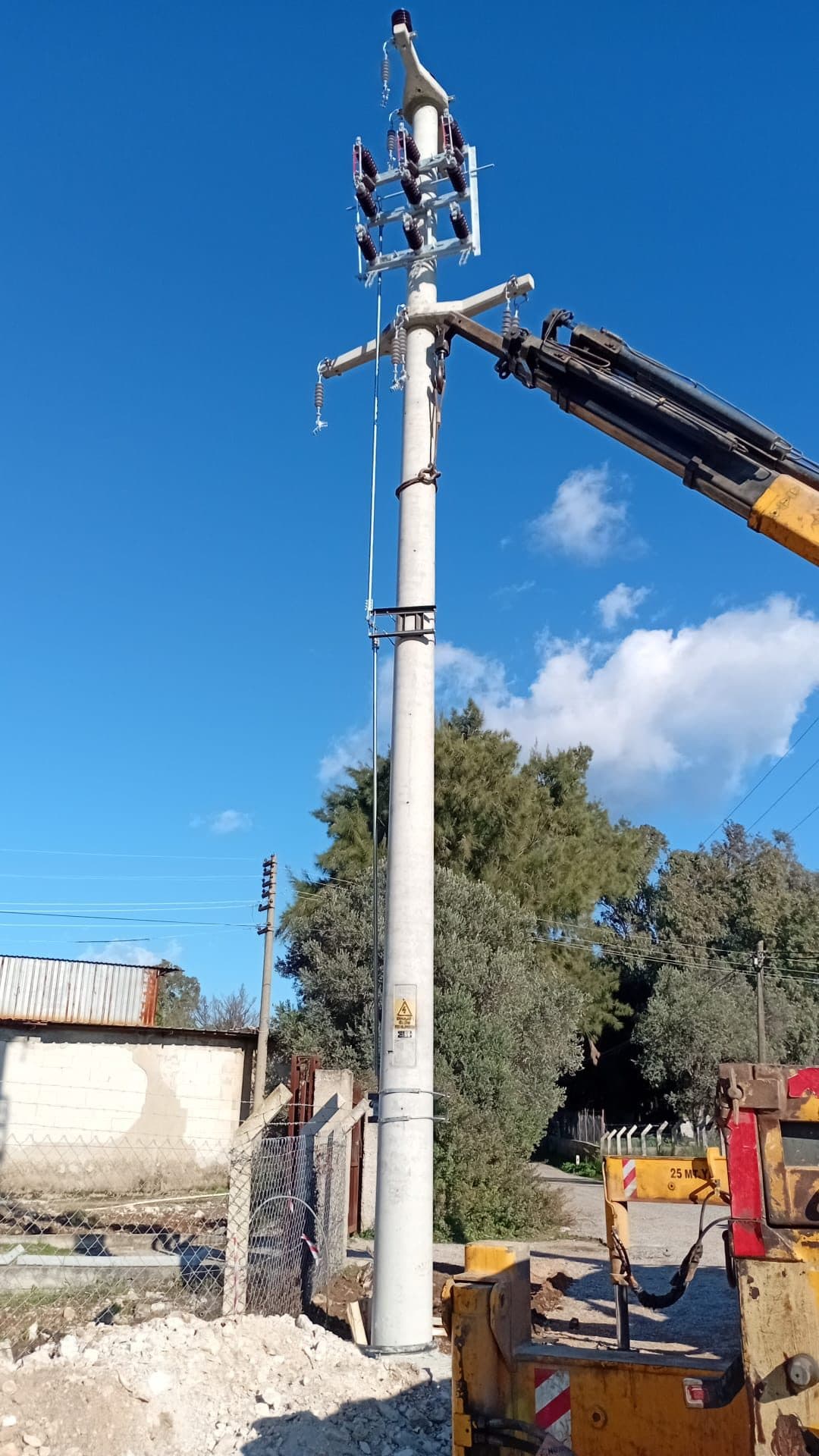
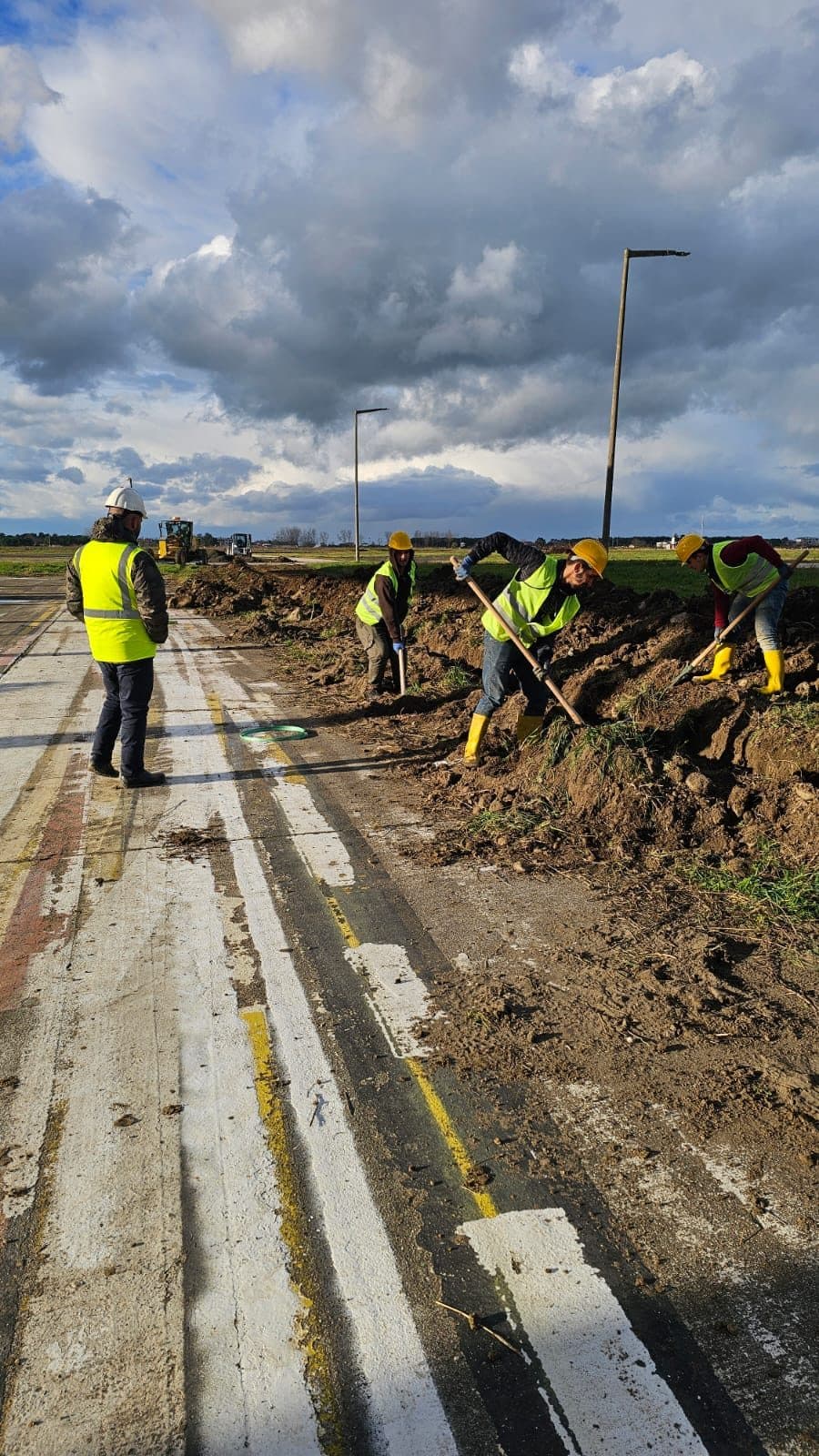
The scope went beyond placing the equipment: MV-LV power cabling, an automatic transfer switch (ATS) panel with a parallel-operation scenario, and the earthing system were all built under the same contract. Grid-to-generator transfer was automated.
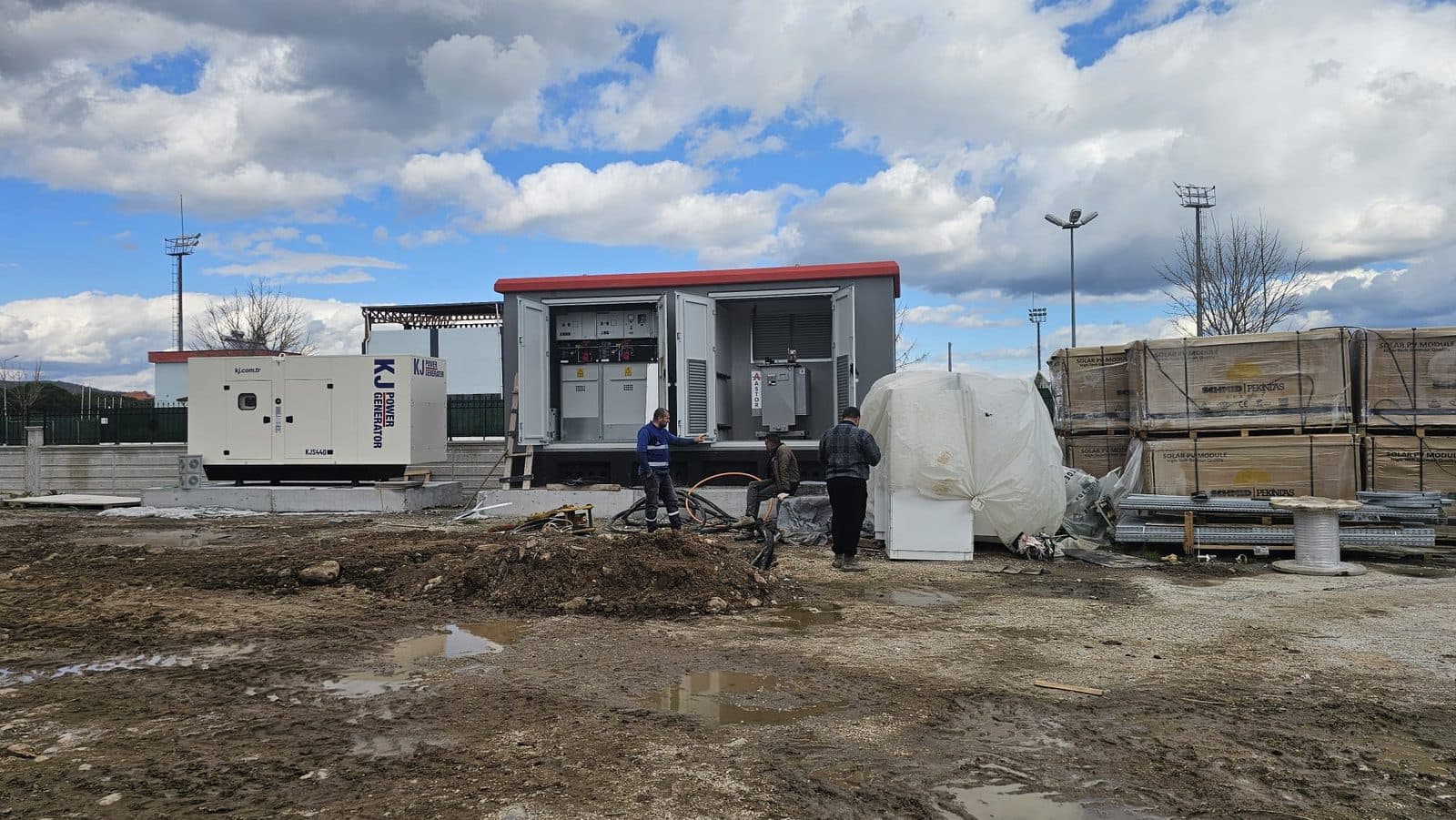
Before commissioning, earthing measurements and transfer tests were performed, and the installation was handed over with test and commissioning reports.
A compact kiosk transformer saves both space and time compared with building a separate transformer room. The concrete kiosk is manufactured in the factory and arrives ready; the MV cubicles, the transformer and the LV panel all sit within one body. Work on site is limited to foundation preparation and cable connections.
The ATS (automatic transfer switch) panel is the unit that brings the generator online when the grid fails and transfers the load back when the grid returns. The critical settings are the waiting times during transfer: load must not be applied before the generator's speed and voltage have settled, and the system must not switch back immediately on a brief fluctuation when the grid returns. These times were set according to the plant's process needs.
A parallel-operation scenario was set up so that the return from generator to grid can be made without cutting the load. At the moment of transfer back, the two sources run together briefly and the load is handed over smoothly, so the process does not suffer a second interruption.
An earthing system requires a separate design in installations with two sources. How the neutral points are connected is critical to the protective devices working correctly on both sources. Earthing resistance was measured before commissioning and the results were added to the handover file.
The order we worked in
- 01
Load analysis
We determined which loads would be fed during an outage, and the generator rating was chosen against that list.
- 02
Kiosk and generator layout
The layout was planned considering foundations, exhaust routing and service access, with the two units placed side by side.
- 03
ATS and parallel scenario
Transfer delays were tuned to the process, and the return to grid was set up to happen without cutting the load.
- 04
Earthing and testing
Earthing resistance was measured, transfer tests were run and the results were handed over as a report.
- Transformer rating
- 1250 kVA compact kiosk
- Generator rating
- 800 kVA diesel
- Transfer
- Automatic via ATS
- Return to grid
- Without cutting load
What this changed on the floor
- 01
Uninterrupted backup power
When the grid drops, the plant keeps running on the generator.
- 02
Automatic transfer
The ATS panel switches between grid and generator without operator intervention.
- 03
Single-contractor scope
Transformer, generator, cabling and earthing were installed by the same team.
- 04
Documented handover
Earthing measurements, transfer tests and commissioning reports were handed over.
Frequently asked about this application
Does the generator rating have to match the transformer rating?
No. The transformer is sized for the plant's total connected load, while the generator is sized for the critical loads that must be fed during an outage. In this project an 800 kVA generator sits against a 1250 kVA transformer; the difference is the power of the loads that can stop during an outage.
Which settings matter most on an ATS panel?
Two delay times are decisive. The first is the time between the generator starting and load being applied: applying load before speed and voltage settle strains the generator. The second is the time before switching back after the grid returns: switching back on brief fluctuations makes the system hunt. Both are set against the interruption the process can tolerate.
Why is parallel operation needed?
Without parallel operation, the load is cut for a moment when the grid returns and the processes suffer a second interruption. Running the two sources together briefly hands the load over without a break. In interruption-sensitive processes this scenario matters as much as the generator itself.
Compact kiosk or a separate transformer building?
A compact kiosk is factory-built, so installation is quick and it takes less space; for mid-sized plants it is usually the right choice. A separate transformer building is preferred at very high ratings, where equipment is expected to be added later, or where special climate control is required.
Do you have a similar need on your line?
Describe the defect you need to catch or send a photo of your production line, and we will assess feasibility and the hardware needed together.
Have a project or a material list?
Send us your list; we return stock status, lead time and wholesale pricing the same day.