

Urla Özbek medium-voltage transmission line
Design and commissioning of a 34.5 kV overhead and underground line
 07
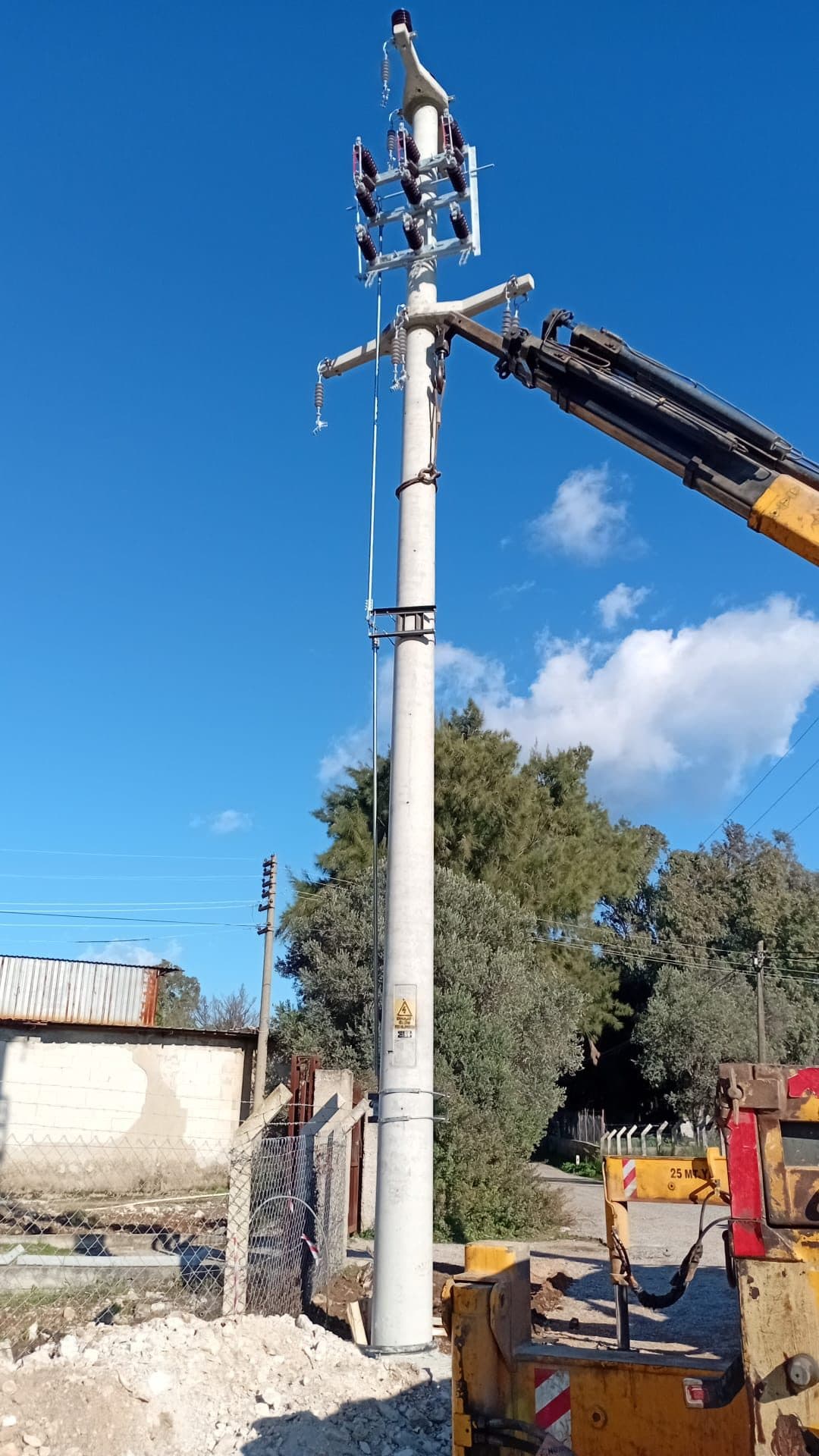
07Design, installation and commissioning of a 34.5 kV medium-voltage transmission line in the Urla Özbek area, combining overhead and underground sections.
- Sector
- Power distribution infrastructure
- Location
- Urla, İzmir
- Field of work
- Power and infrastructure
- Year completed
- 2024
The need
What had to be solved on site?
The facility in the Urla Özbek area needed a reliable medium-voltage supply. Because the route crosses olive groves and farmland, it could be built neither entirely overhead nor entirely underground.
An overhead line is quicker and cheaper but restricts use of the land; an underground line frees the land but brings excavation and jointing costs. The decision was an engineering question that had to be answered separately for each section of the route.
How we solved it
In the Urla Özbek area we undertook the design, installation and commissioning of a 34.5 kV medium-voltage transmission line. Following the terrain, the route was built combining overhead and underground sections.
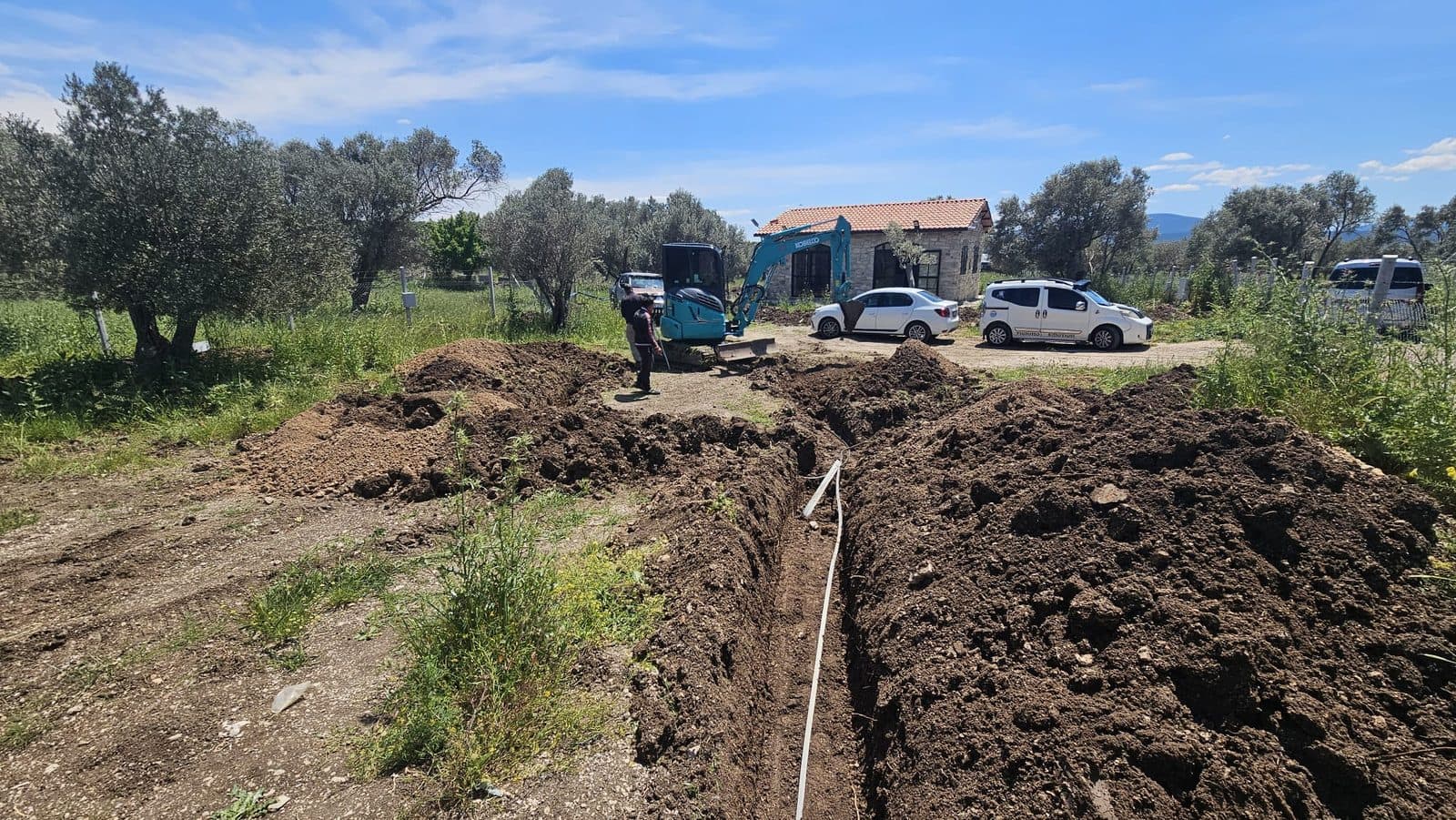
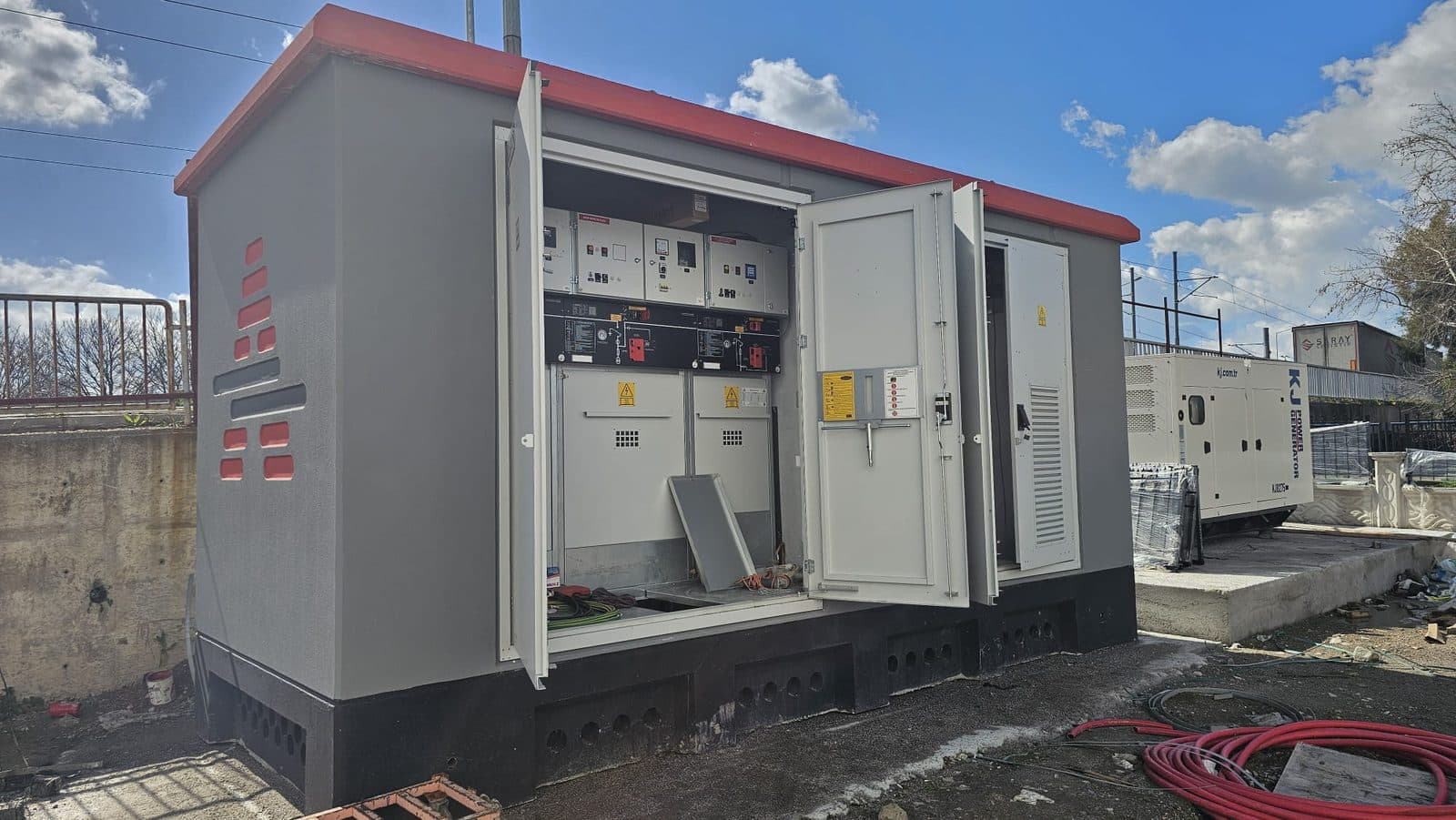
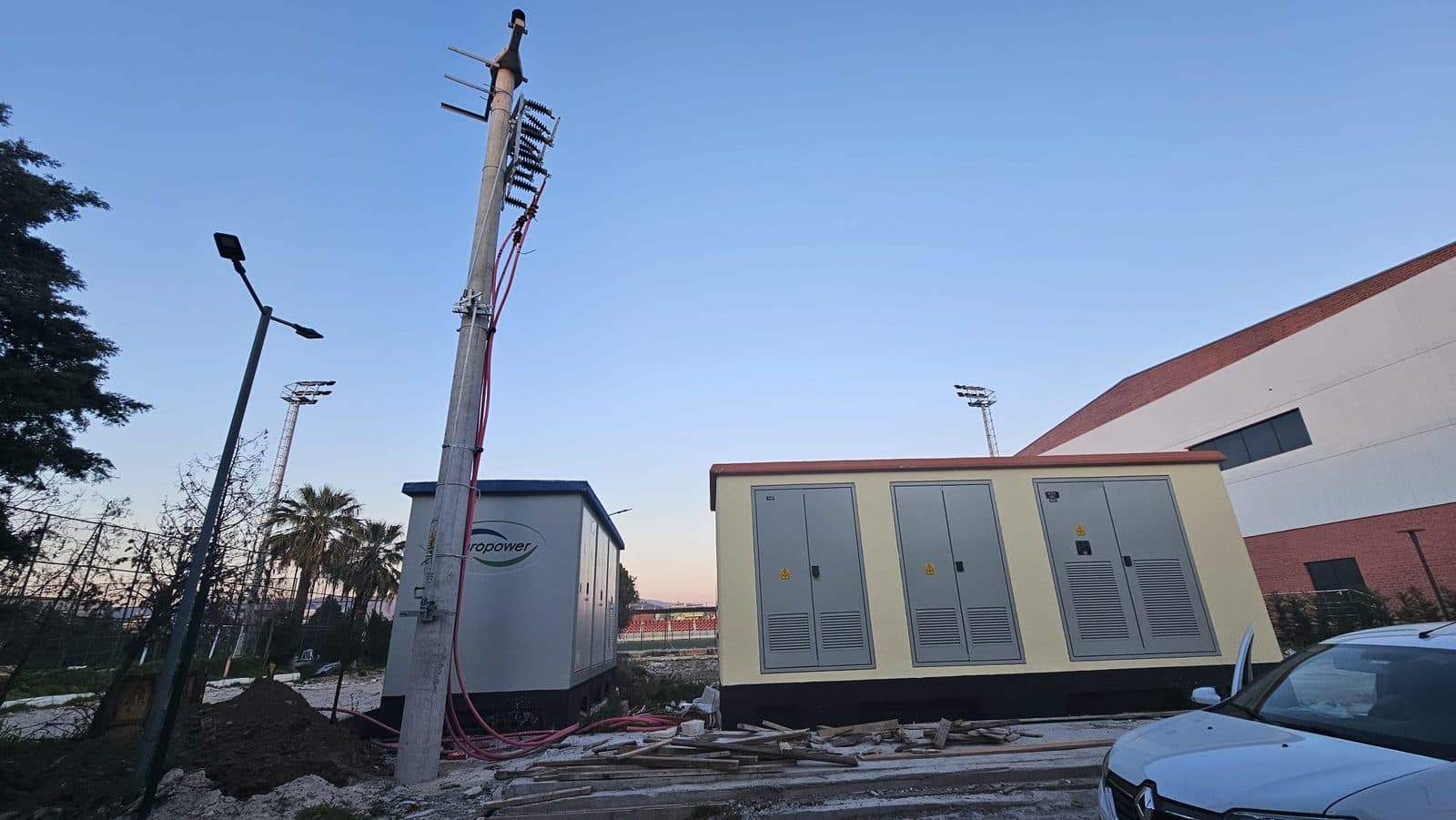
The work covered MV pole erection and cross-arm mounting, pulling the 34.5 kV conductors, installing insulators and accessories, and making the MV cubicle and transformer connections. Poles were set in place by crane, and where the line went underground the route was trenched and ducted.
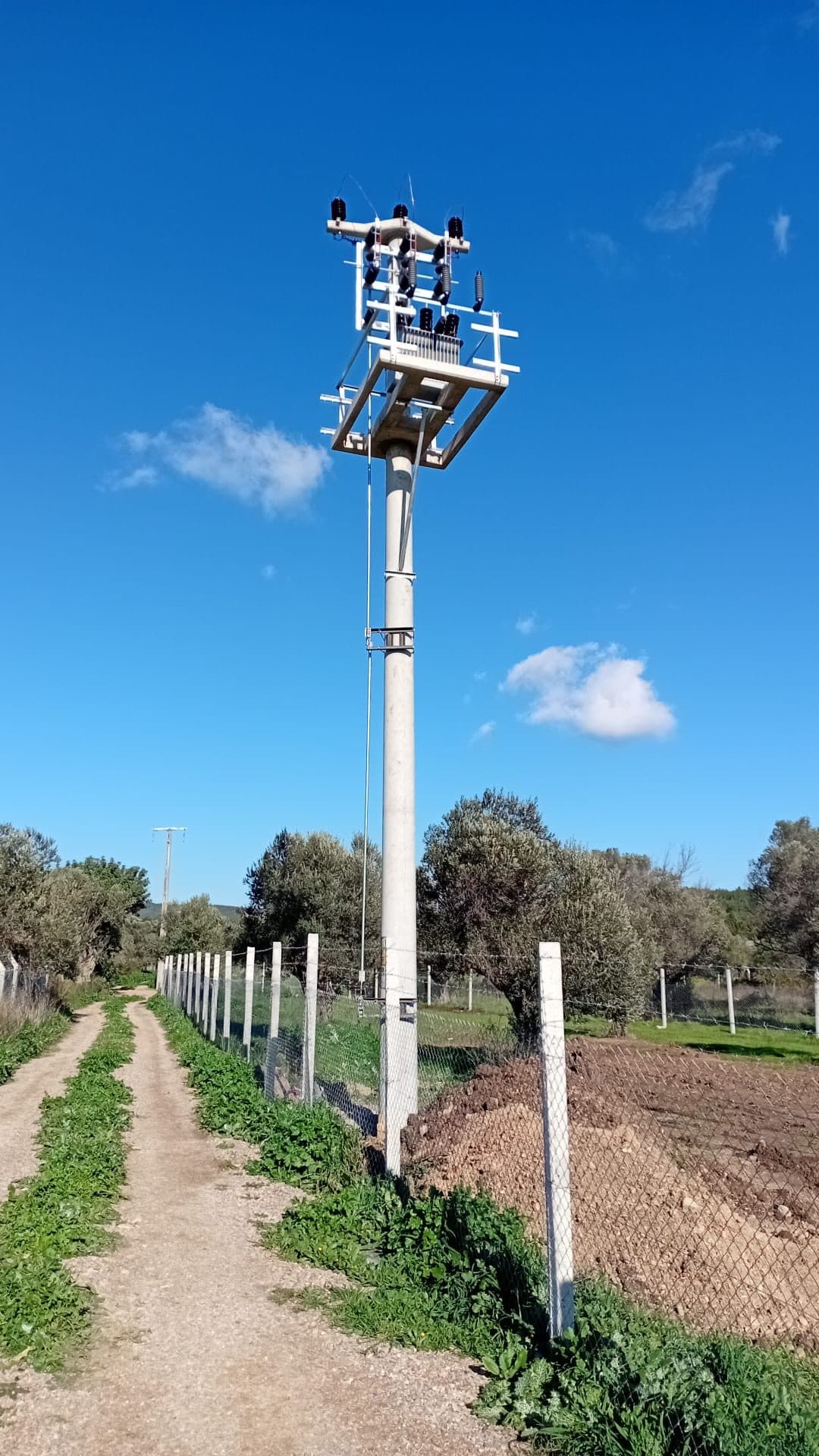
Commissioning was coordinated with the distribution company, and the line was energised after obtaining the İzmir GDZ compliance report. The route was planned to suit a future increase in capacity.
The route was divided into sections according to land use. Sections under cultivation and crossed by machinery were taken underground; open and rough sections were built overhead. This mixed approach reduced both the total cost and the friction with landowners.
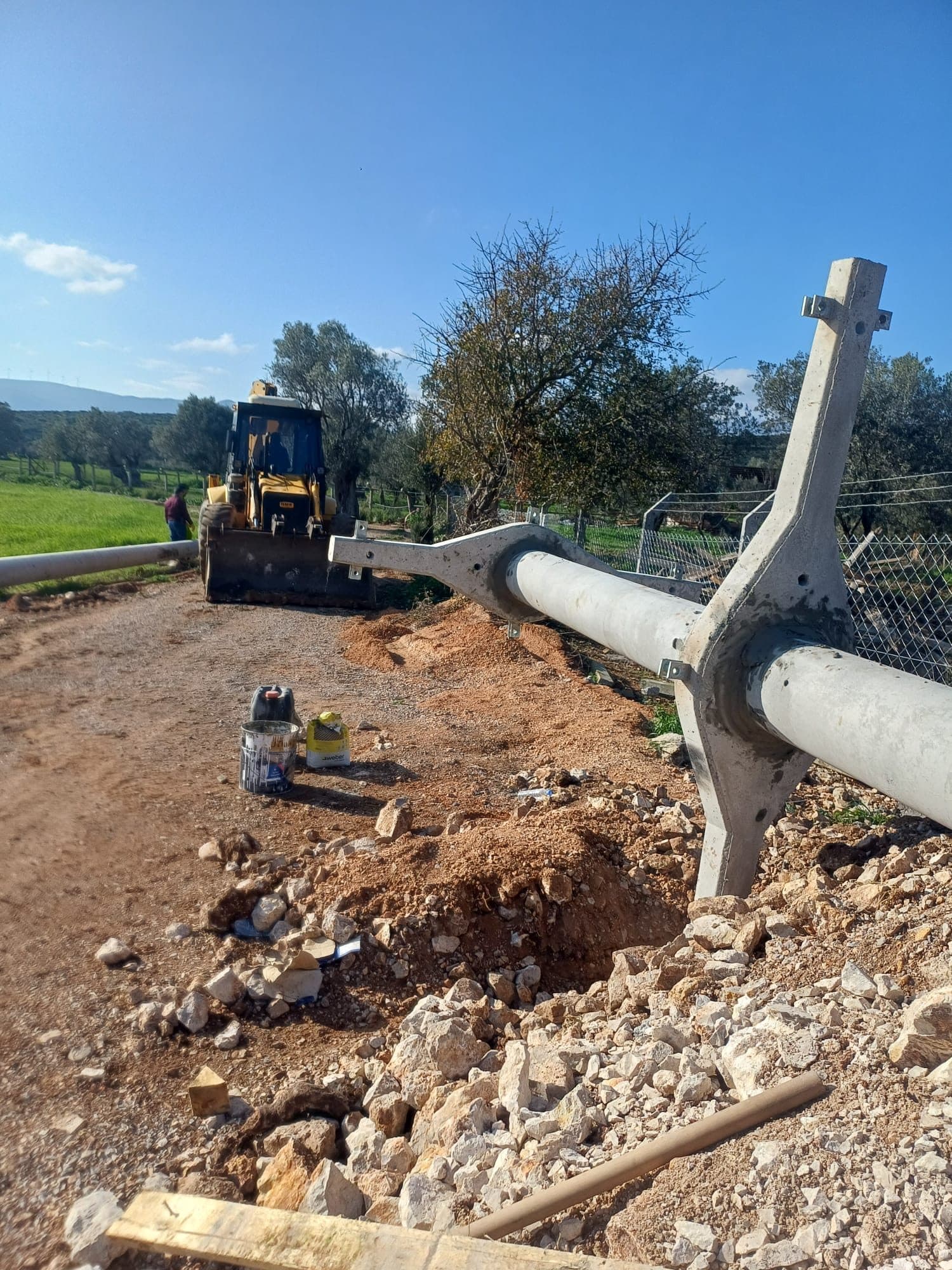
Poles were erected by crane. Because concrete poles are heavy and carry a risk of toppling, the depth and backfill of the foundation pit were calculated for the pole length and soil type. Cross-arm mounting and insulator fitting were completed before conductor pulling, minimising the need to climb the pole during the pull.
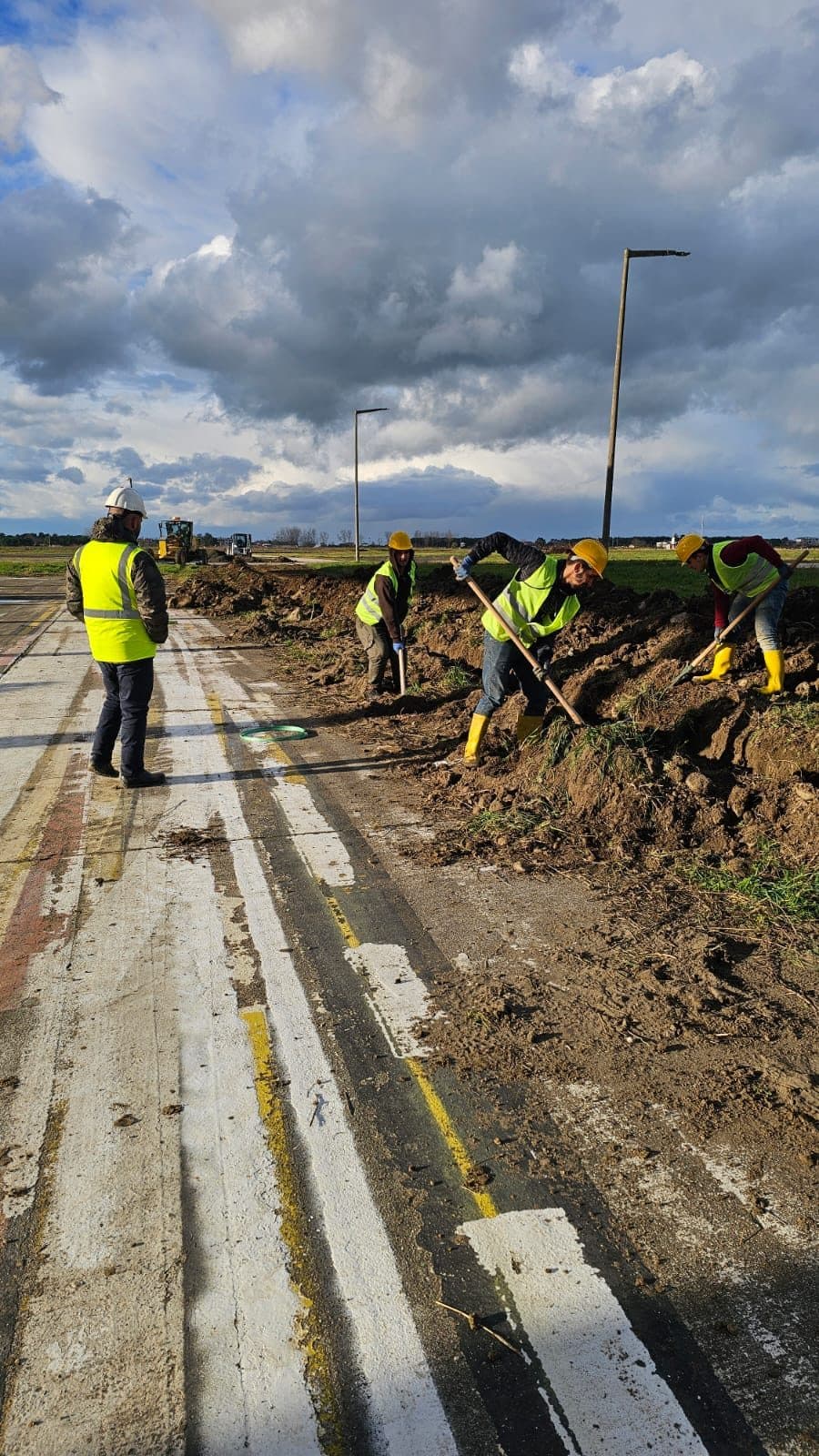
On the underground sections, the duct route was planned taking cable bend radius and pulling tension into account. Dropping below the cable's permitted bend radius leaves invisible damage in the insulation, and the fault surfaces years later. Duct bends were therefore kept wide at direction changes.
Commissioning was coordinated with the distribution company. The line was energised once the İzmir GDZ compliance report was obtained. The route was planned with a possible future capacity increase in mind, and spare ducts were left for an additional pull.
The order we worked in
- 01
Route survey
Land use was surveyed on site, and which sections would be overhead and which underground was decided after that survey.
- 02
Pole foundations and erection
Foundation depth was calculated for pole length and soil type; poles were set by crane, with cross-arm and insulator fitting completed at ground level.
- 03
Conductor pulling
The 34.5 kV conductors were pulled observing sag and tension values, and every connection point was checked individually.
- 04
Approval and energisation
After the MV cubicle and transformer connections were completed, the GDZ compliance report was obtained and the line was energised.
- Voltage level
- 34.5 kV
- Line type
- Overhead plus underground
- Approval
- İzmir GDZ compliance report
- Expansion
- Spare ducts left
What this changed on the floor
- 01
Uninterrupted power
Reliable power transmission was provided to the region.
- 02
GDZ-approved energisation
The line was energised after obtaining the İzmir GDZ compliance report.
- 03
A route ready to grow
The infrastructure was planned to accommodate a future capacity increase.
- 04
Delivered by our own team
Installation and checks were carried out by our own field team.
Project images
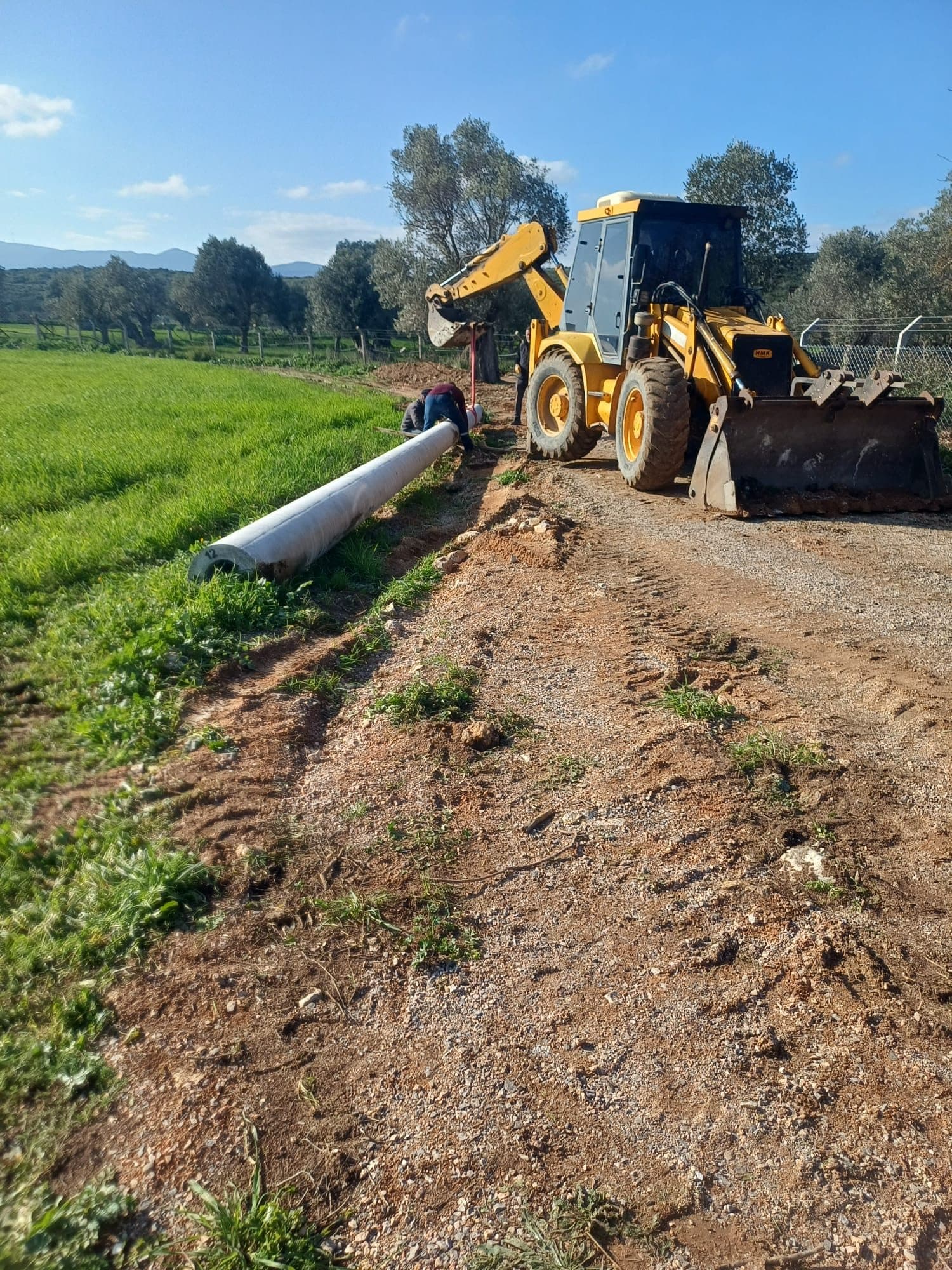
Site work along the power line route, with a pole being moved by an excavator 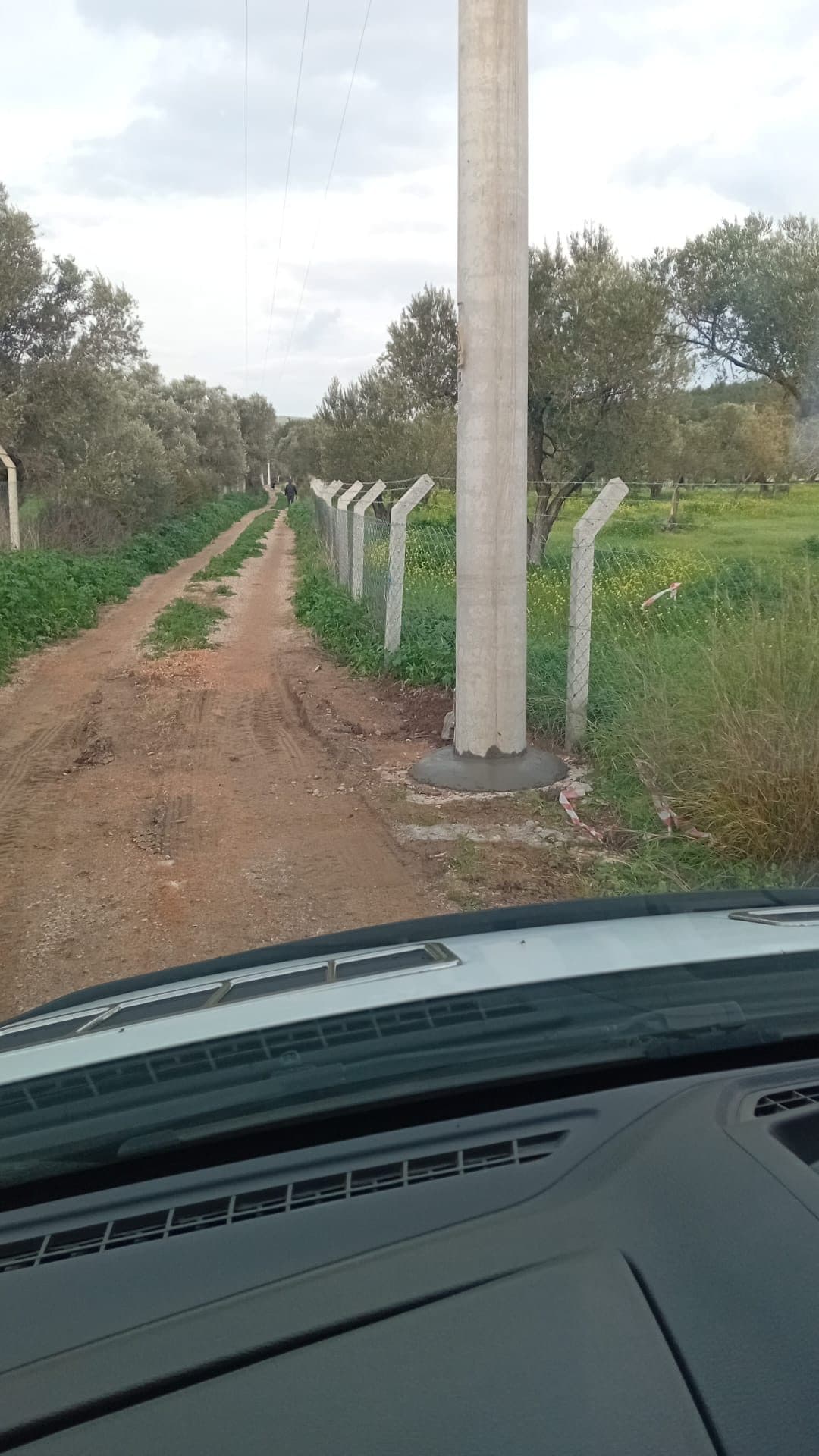
A completed power line pole with the conductors strung 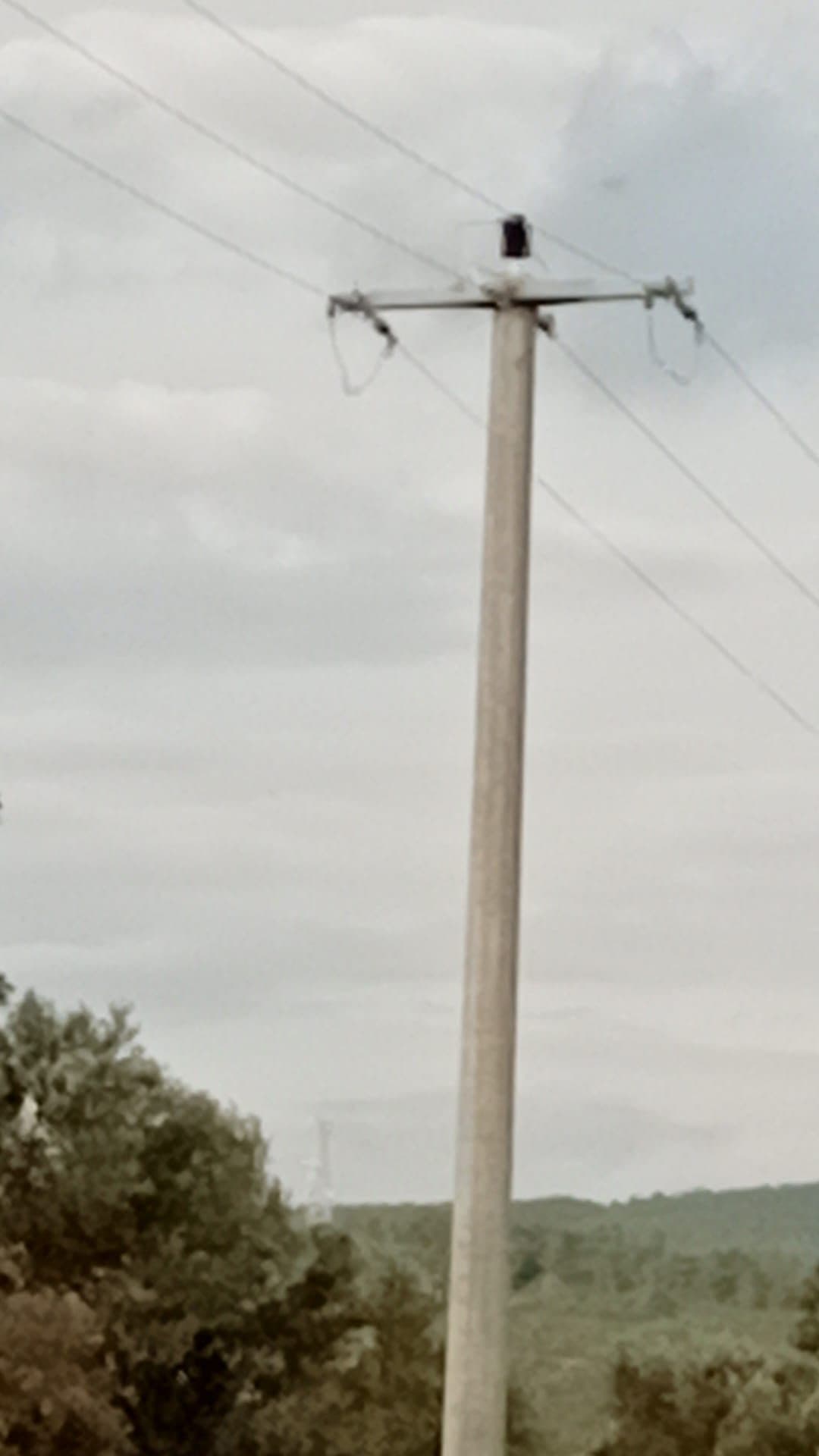
Concrete poles lined up along the route, seen on site
Frequently asked about this application
Should the line be overhead or underground?
The decision is not made on cost alone. An overhead line is cheaper and faults are easier to locate, but it restricts land use and is exposed to weather. An underground line frees the land and is protected from external effects, but excavation is expensive and finding a fault is harder. On long routes a mixture of the two is usually the most sensible answer.
Why does cable bend radius matter so much?
A cable bent tighter than its permitted radius has its insulation thinned or develops micro-cracks inside. That damage is invisible at installation and usually passes testing, but over the years it turns into partial discharge and finally a fault. Duct bends are therefore kept wide at direction changes.
What does the GDZ compliance report mean?
It is the distribution company's confirmation that the installation complies with its technical specification and with regulation. Without this report the line cannot be energised. The process covers project approval, site inspection and the closing of any deficiencies.
Can the line's capacity be increased later?
Yes, when the route is planned with that possibility in mind. Spare ducts were left on the underground sections for a further pull, and on the overhead sections the poles and cross-arms were chosen to be able to carry additional conductors later. Without that foresight, increasing capacity means rebuilding the route.
Do you have a similar need on your line?
Describe the defect you need to catch or send a photo of your production line, and we will assess feasibility and the hardware needed together.
Have a project or a material list?
Send us your list; we return stock status, lead time and wholesale pricing the same day.