

Four-camera line inspection in moulding production
Omron FH series cameras at line entry and exit
 05
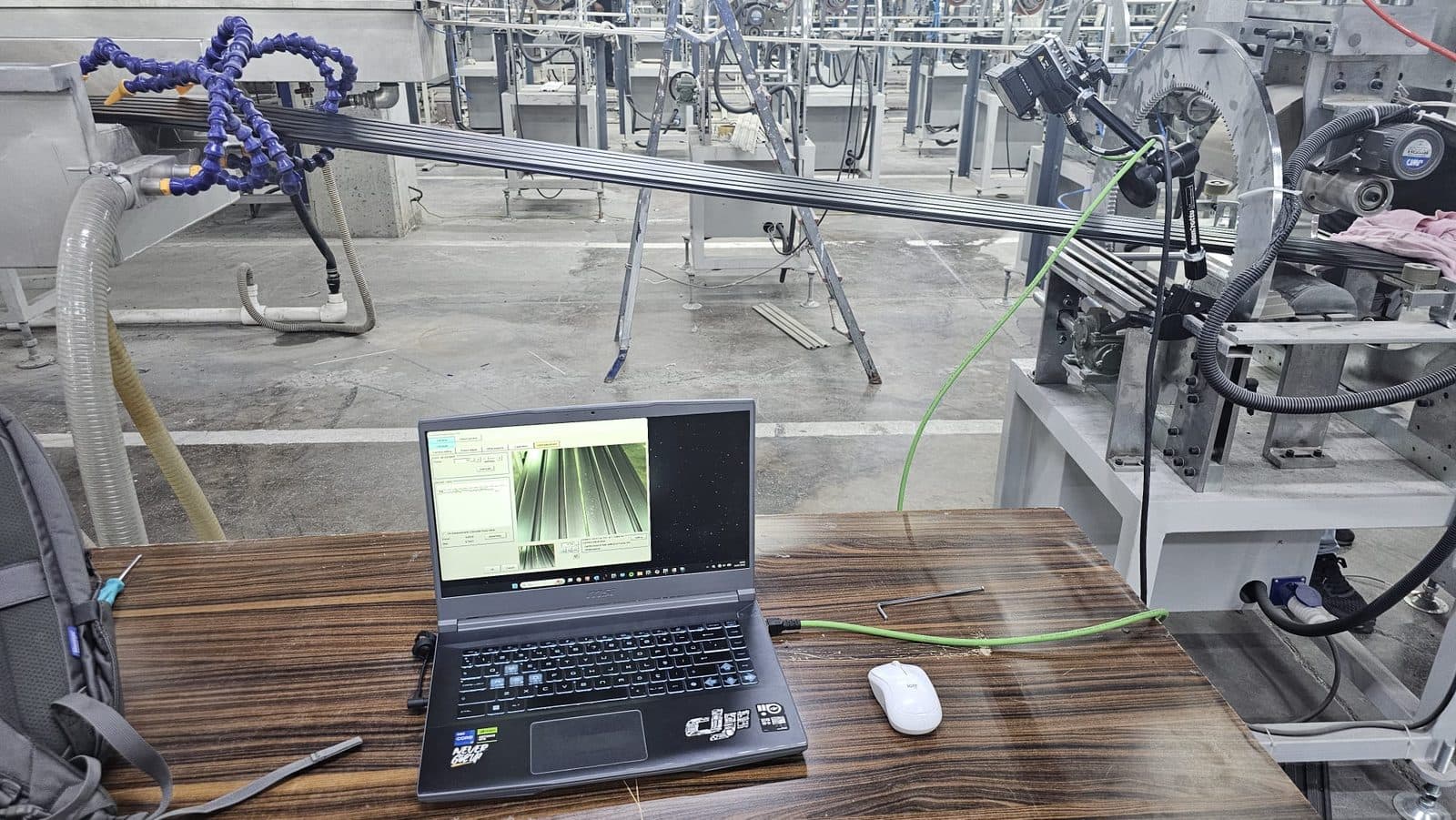
05Four Omron FH series cameras placed at the entry and exit of the moulding line catch surface defects in real time and keep quality consistent.
- Customer
- Bir yapı elemanı üreticisi
- Sector
- Building element manufacturing
- Field of work
- Machine vision and quality control
- Year completed
- 2026
The need
What had to be solved on site?
In moulding production, knowing where a defect appears matters as much as finding it. Did a product that comes out faulty at the end of the line arrive that way in the raw material, or was it damaged during the process? Inspection at a single point cannot answer that.
Without the answer there is no improvement: the team either blames the supplier or the machine. Either way, scrap keeps being produced until the real cause is found.
How we solved it
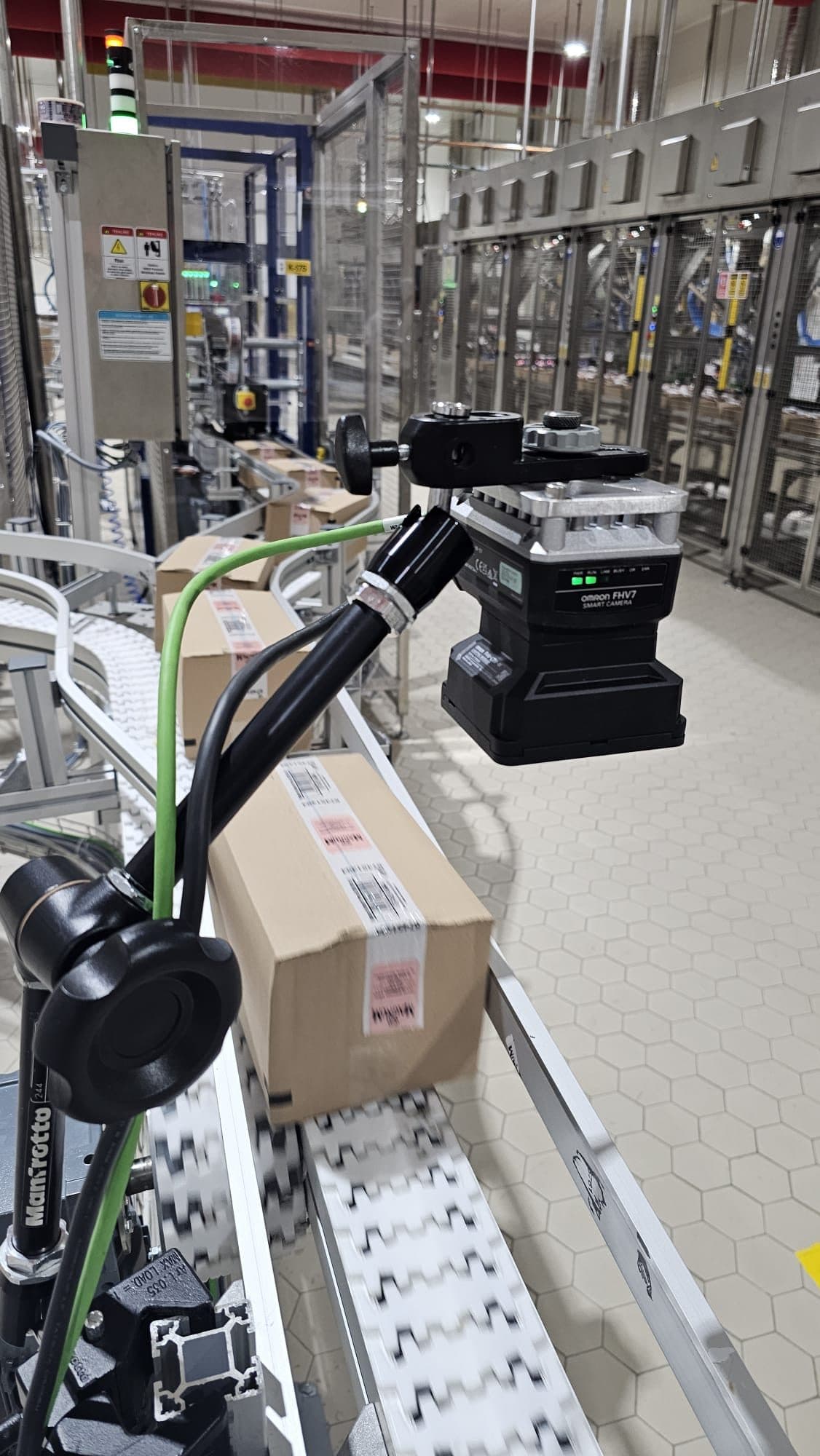
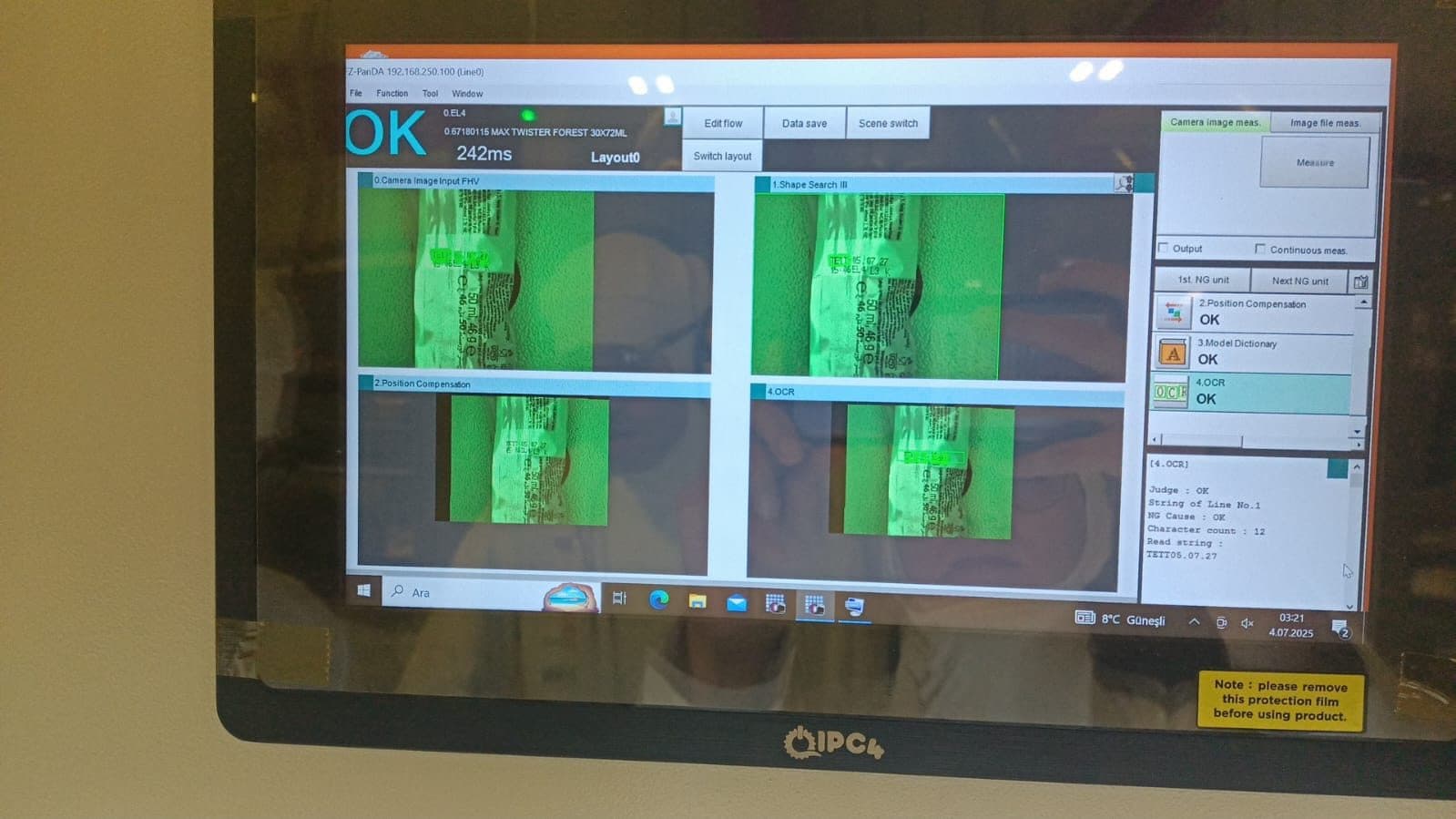
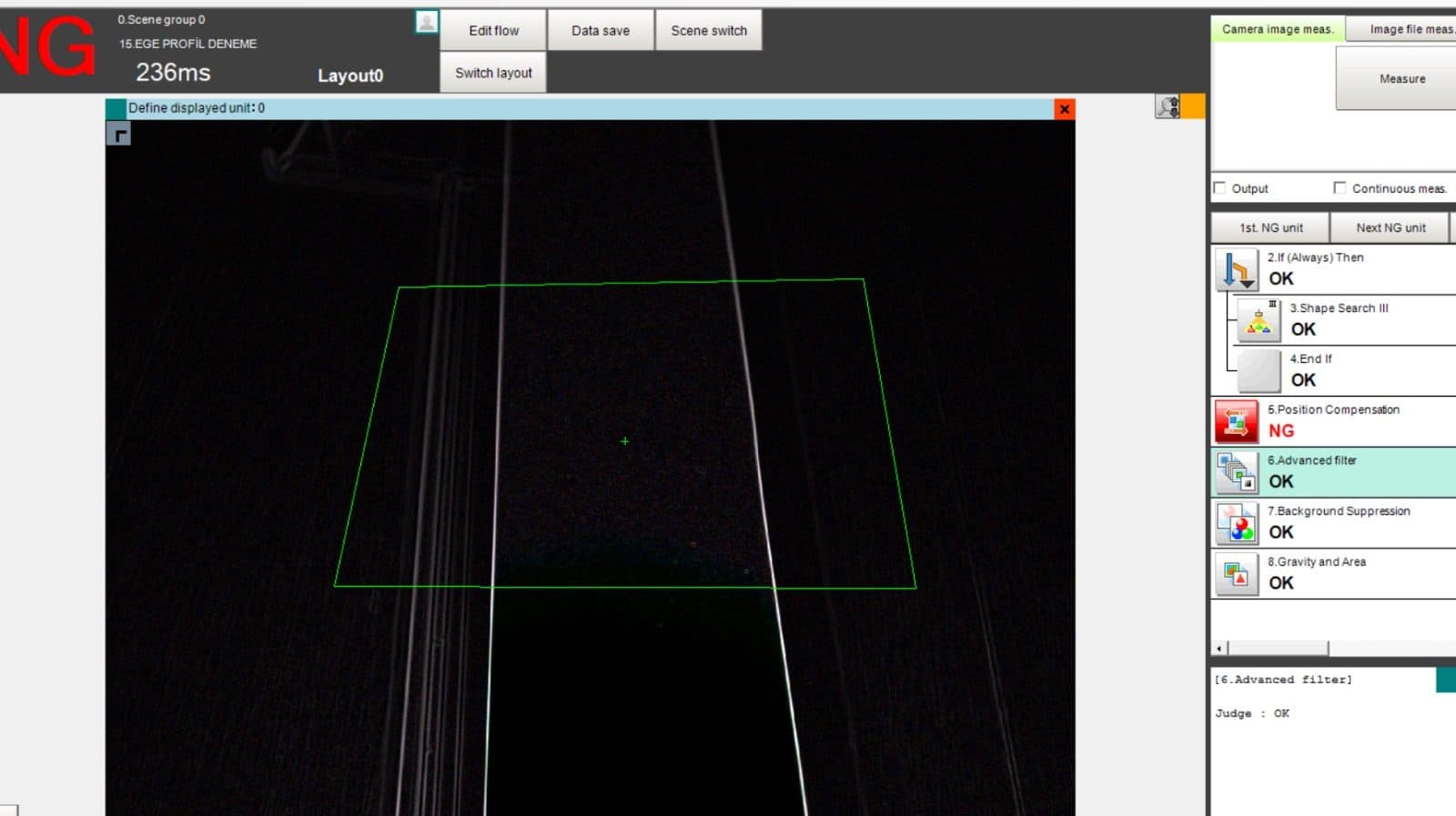
Moulding products leaving the line are inspected in real time with Omron FH series camera systems. Four cameras in total, positioned at the entry and the exit of the line, immediately detect any defect that may appear on the product surface.
The two-point setup also makes it possible to tell where a fault appears: if a product passes cleanly at the entry but comes out defective at the exit, the problem is inside the process. This distinction speeds up root-cause analysis.
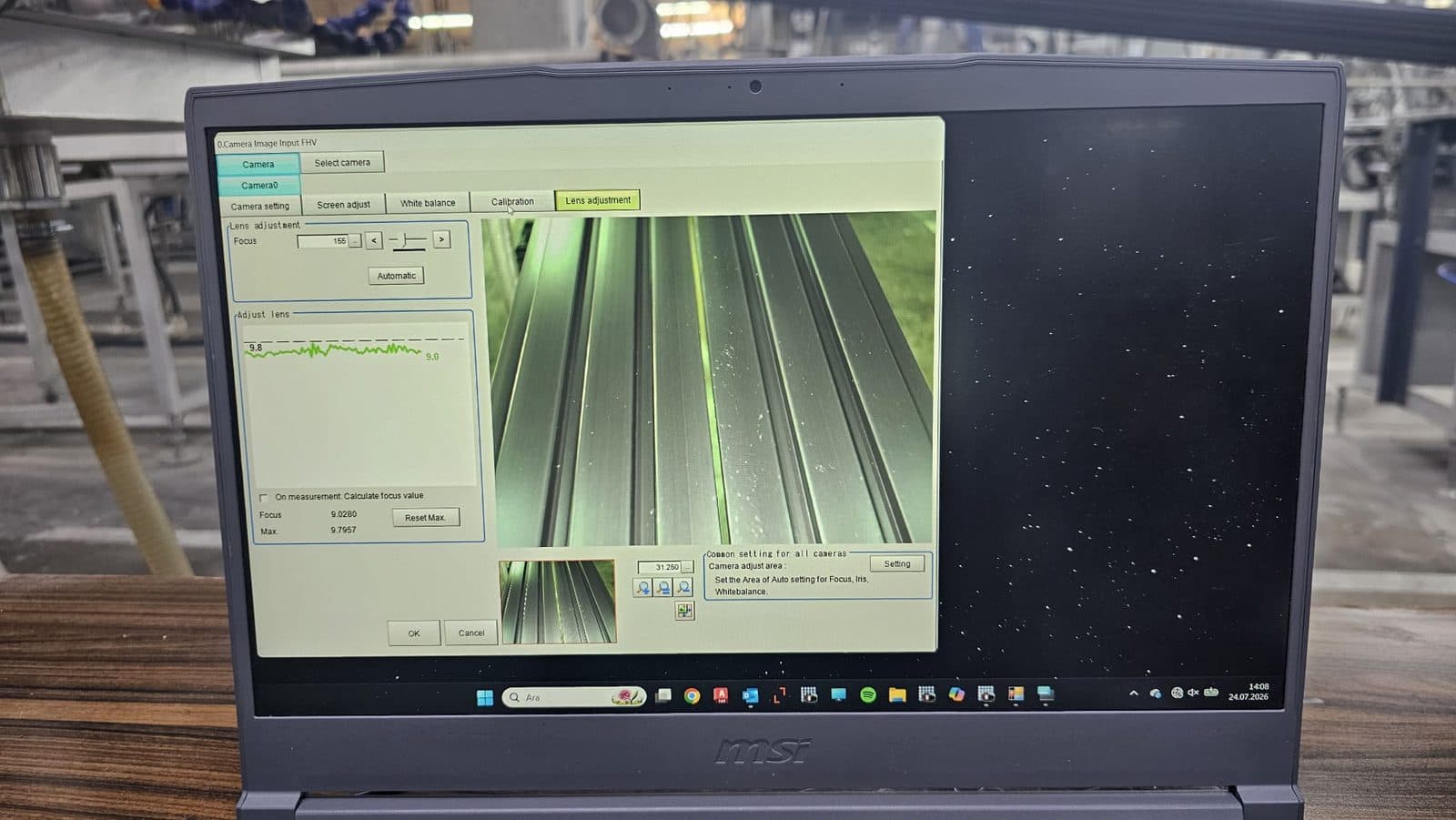
Faulty products are removed while still on the line, so no work is wasted at later stations and only faultless products reach the customer.
Four cameras in total were placed as a pair at the line entry and a pair at the exit. The pair at the entry records the product's condition going into the process; the pair at the exit records the condition coming out. Comparing the two records shows at which stage the defect appeared.
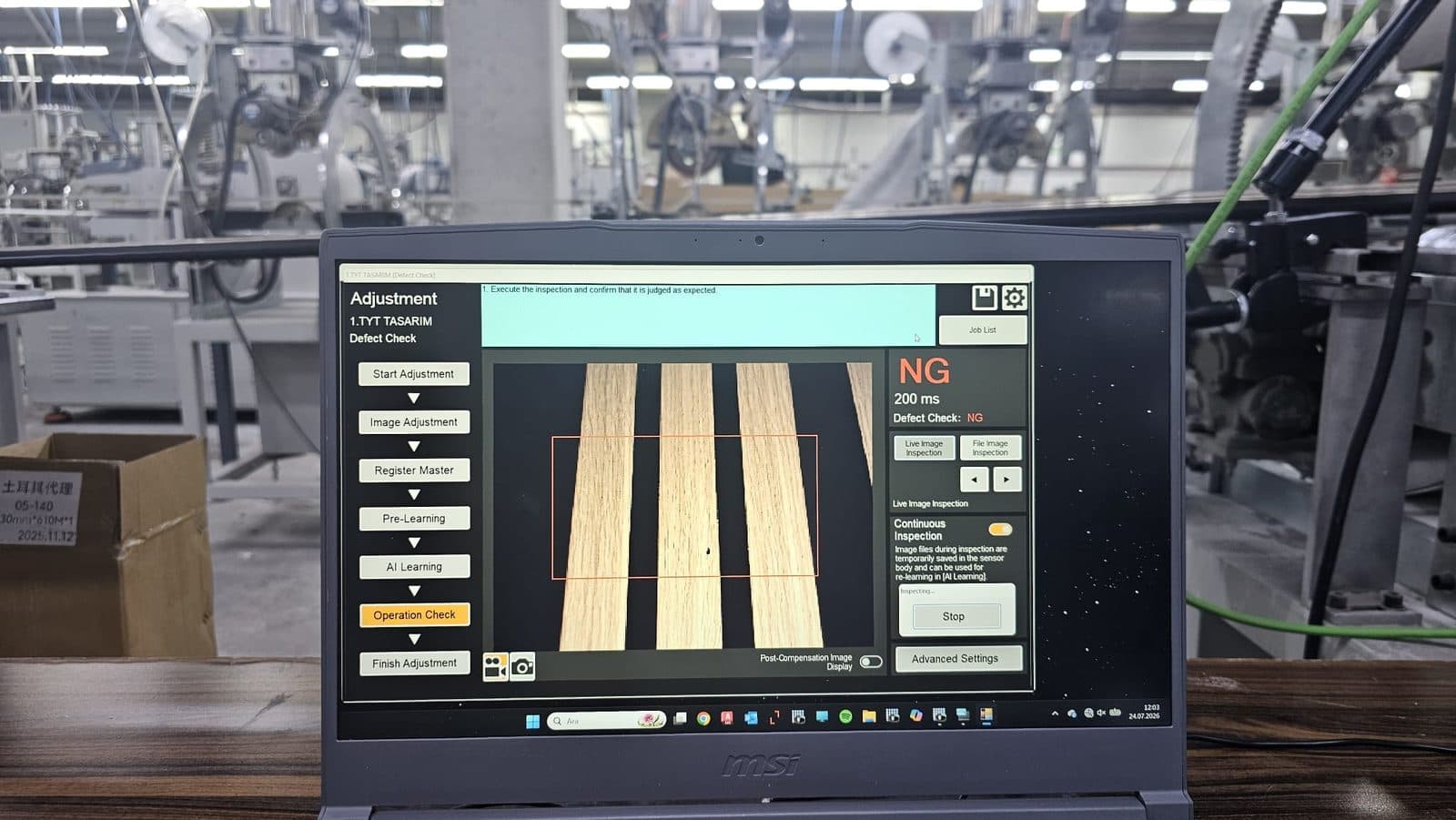
The practical benefit is this: a run that passes cleanly at the entry but comes out defective at the exit says to look straight at the process parameters. The opposite case — products already faulty at the entry — points to the incoming material. Root-cause analysis rests on records rather than guesswork.
Because the product surface is matt and light in colour, the lighting was set at a grazing angle to the surface. Grazing light makes the smallest bump or dip stand out by casting a shadow; under flat lighting those defects disappear from the image.
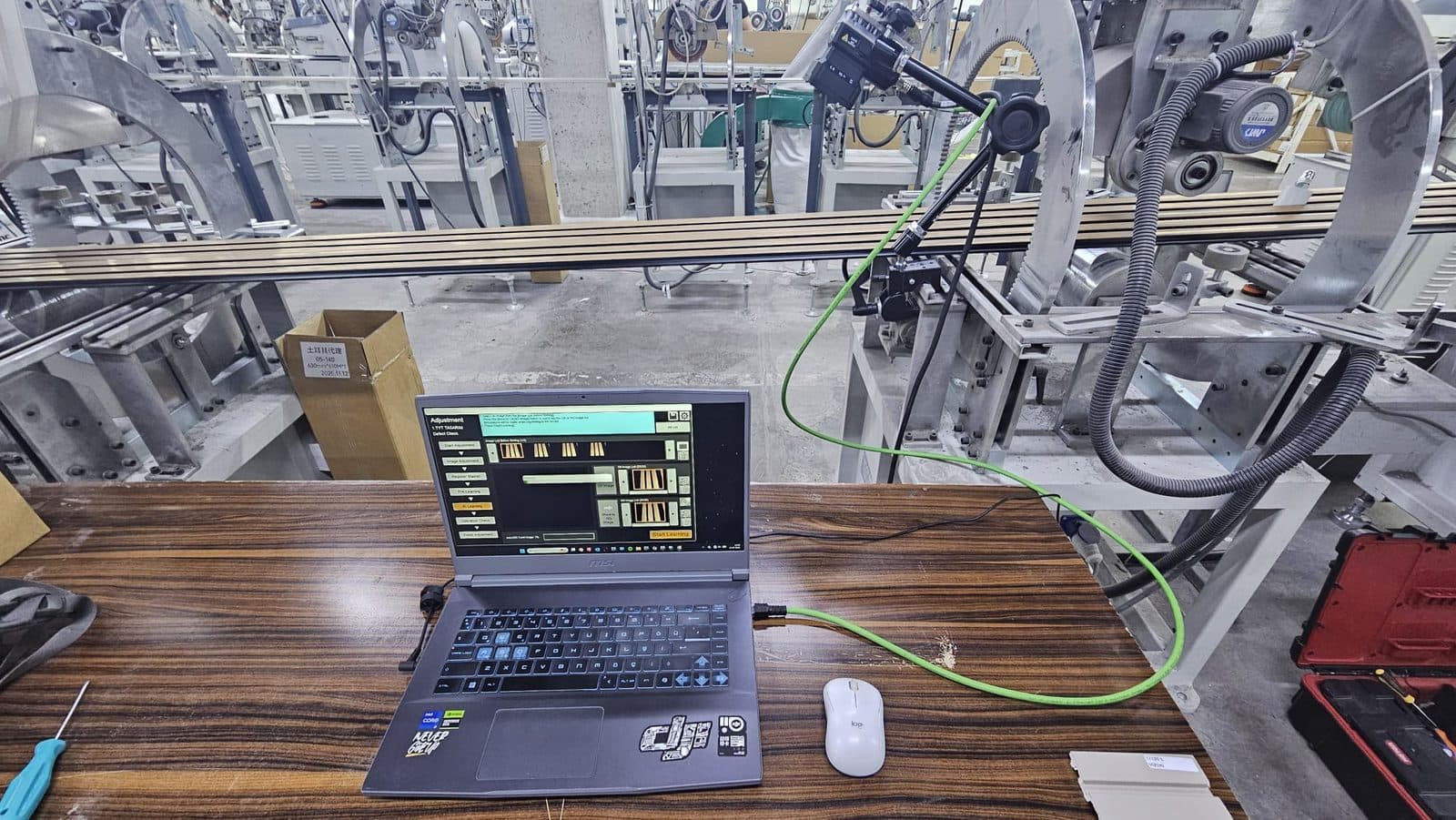
During commissioning, the acceptance threshold of each camera was tuned separately. The entry cameras run slightly more tolerant: their purpose is to record the incoming condition, not to sort out material. The actual reject decision is made by the exit cameras.
The order we worked in
- 01
Choosing two inspection points
Entry and exit were chosen so that the part of the process capable of producing defects sits between them.
- 02
Grazing-light setup
Lighting was positioned at a grazing angle so bumps and dips on the matt surface cast a shadow.
- 03
Per-camera threshold tuning
Entry cameras were tuned more tolerant for recording, exit cameras sharper for the reject decision.
- 04
Comparative reporting
Entry and exit results are reported together, so whether the defect appeared in the process is directly visible.
- Cameras
- Four (2 entry, 2 exit)
- Lighting
- Grazing angle
- Root cause
- Identified from records
- Reject point
- Line exit
What this changed on the floor
- 01
High precision
Surface defects and production faults are identified at line speed.
- 02
Two-point inspection
Comparing entry and exit shows whether the fault appears inside the process.
- 03
Continuous inspection
Quality control runs without stopping the line, protecting throughput.
- 04
No wasted work
A defective product is removed before it enters later stations.
Frequently asked about this application
Why put cameras at both the entry and the exit?
Inspection at a single point tells you a defect exists but not where it came from. A two-point setup records the product's condition entering and leaving the process; comparing the two shows whether the defect came from the material or the process. Without that distinction, improvement work rests on guesswork.
Why was grazing lighting chosen?
On matt, light-coloured surfaces the brightness difference between a defect and sound material is very small, and flat lighting makes the defect disappear from the image. When light arrives at a grazing angle, even the smallest bump casts a shadow and the contrast becomes clear.
Why are the entry cameras set more tolerant?
The entry cameras' job is to record, not to sort. If a tight threshold were applied there too, small deviations the process could still correct would be rejected, creating needless scrap. The reject decision was left to the exit cameras, which see the product in its final state.
Does the system slow production down?
No. The cameras are triggered at line speed and the decision time is shorter than the time it takes the product to reach the next station. Neither slowing nor stopping the line is required for inspection.
Do you have a similar need on your line?
Describe the defect you need to catch or send a photo of your production line, and we will assess feasibility and the hardware needed together.
Have a project or a material list?
Send us your list; we return stock status, lead time and wholesale pricing the same day.